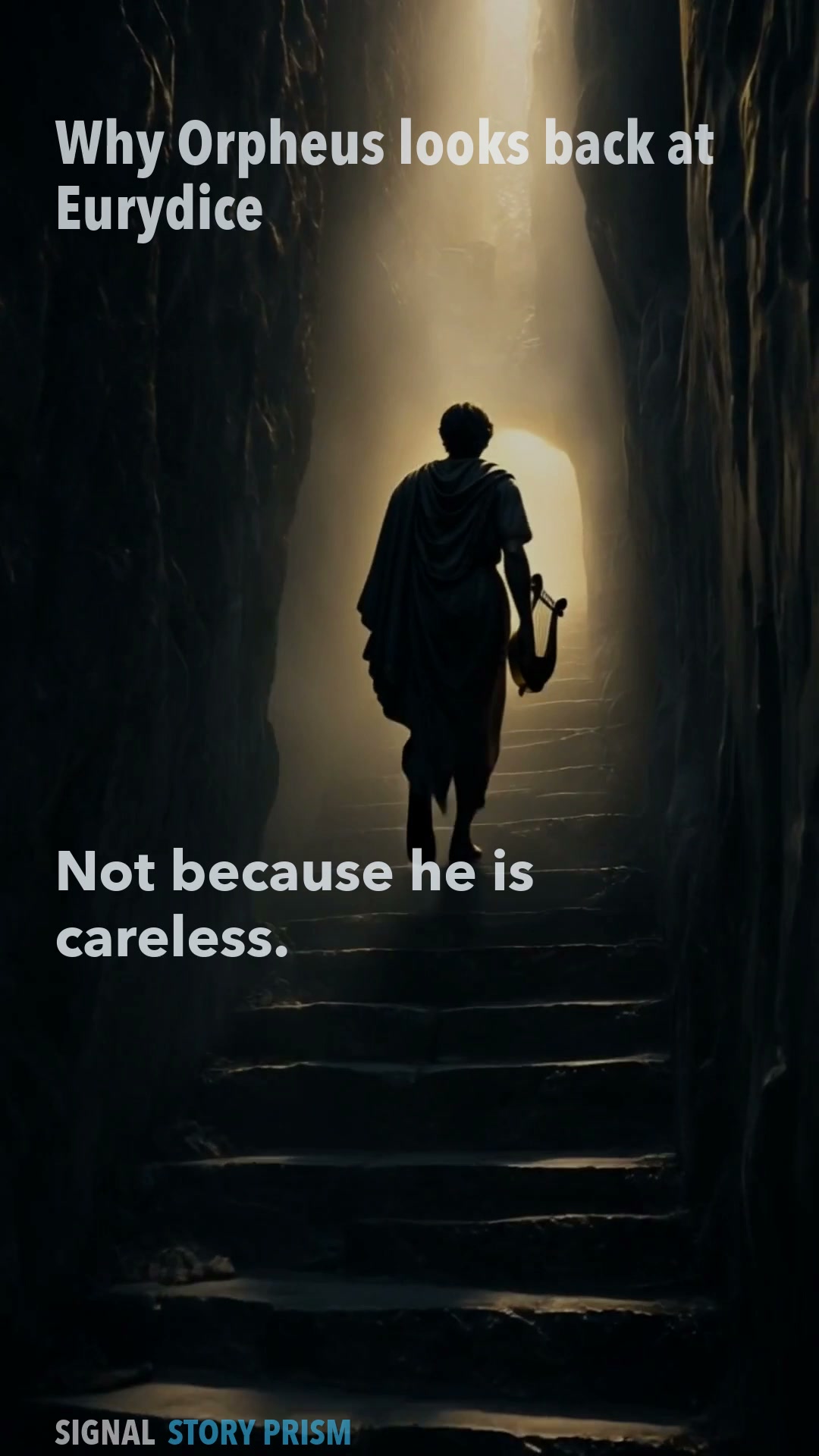
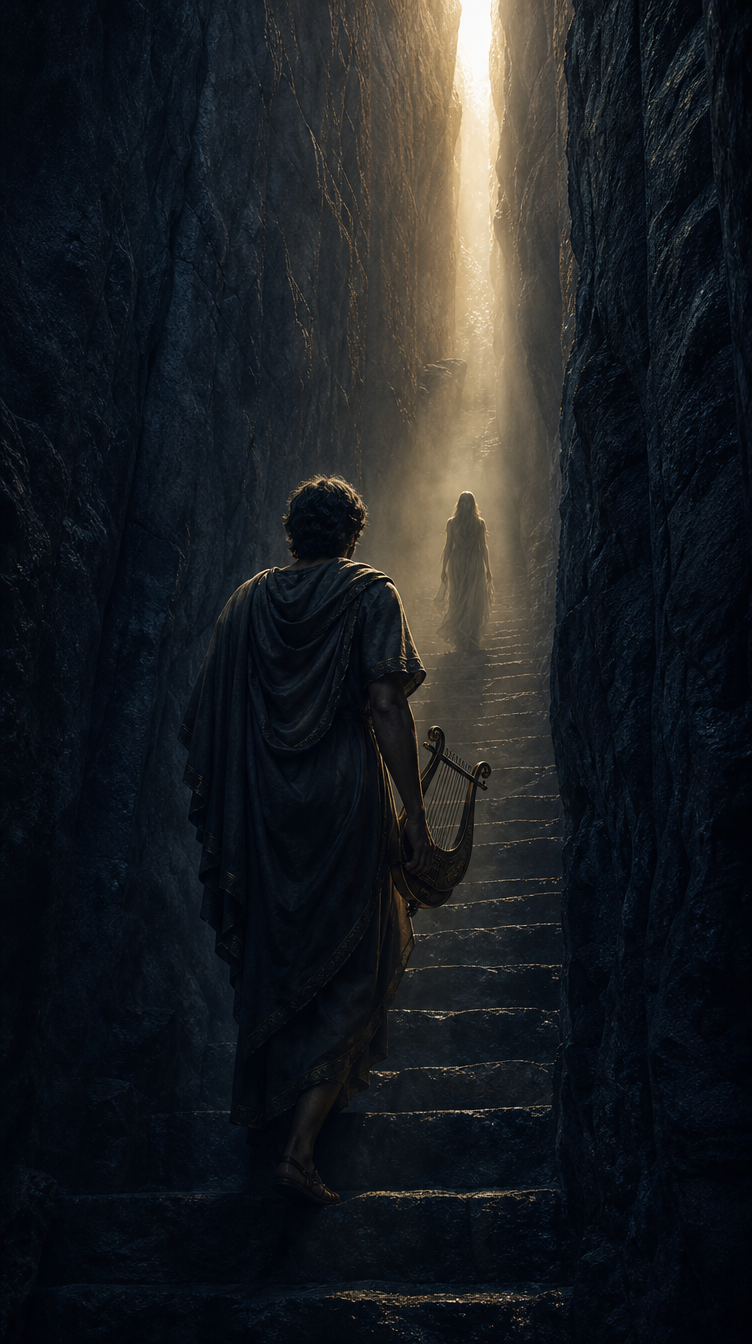
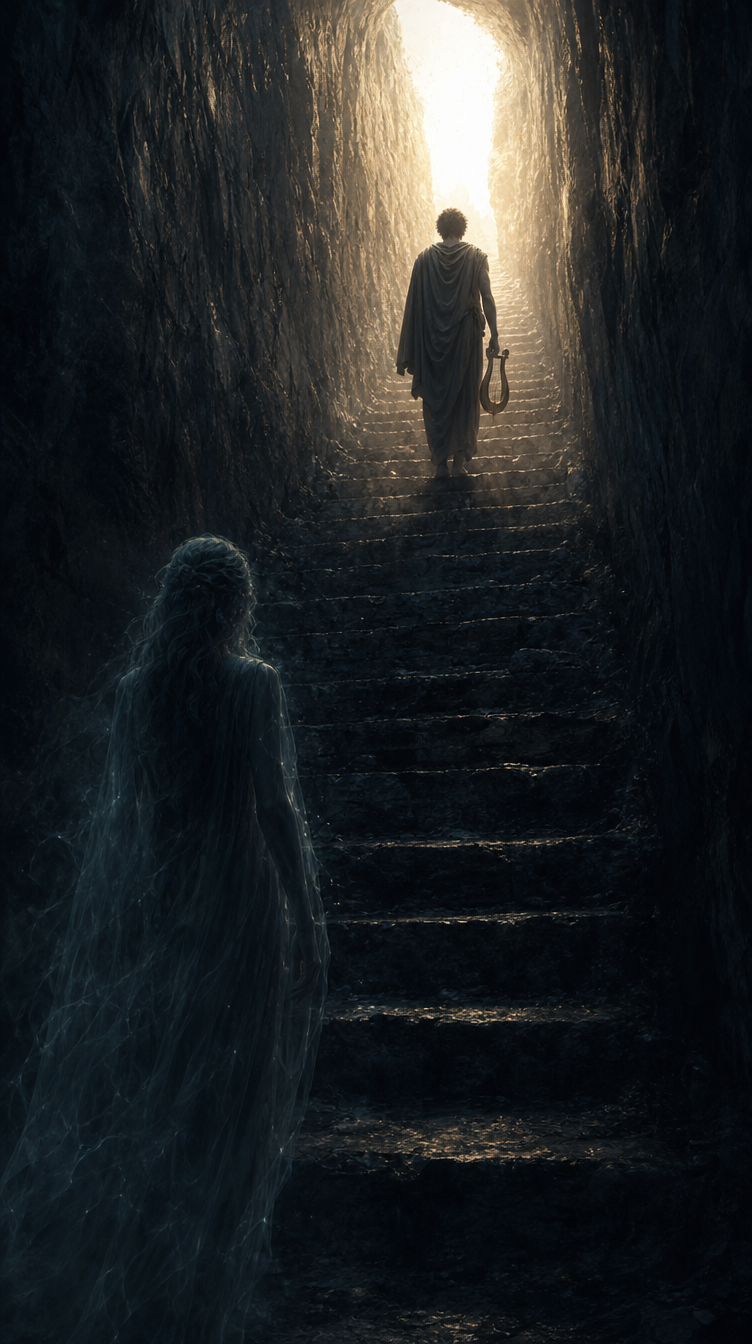
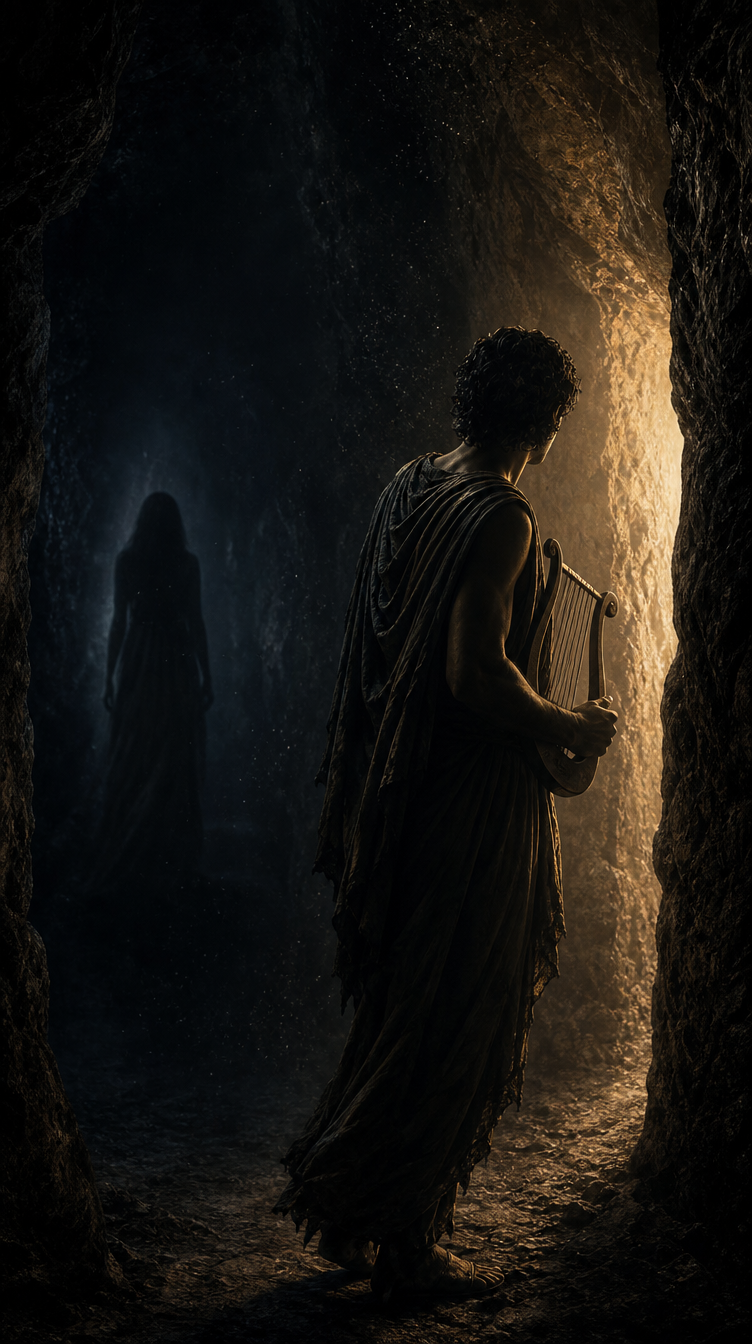
This folio expands the published Story Prism video into a library record: the narrative spine, source trail, key still scenes, and reading path. The claim stays narrow: Wait, Orpheus looks back why? Not because he is careless. In the underworld, he wins Eurydice back with one cruel rule: walk toward daylight, trust the gods, and never turn to see whether she is there.
01Story
The story works because its surface action hides a structural problem underneath.
Wait, Orpheus looks back why? Not because he is careless. In the underworld, he wins Eurydice back with one cruel rule: walk toward daylight, trust the gods, and never turn to see whether she is there. That surface reading feels neat: he fails a simple test of patience.
03Human cost
The section keeps the video's core idea in written form.
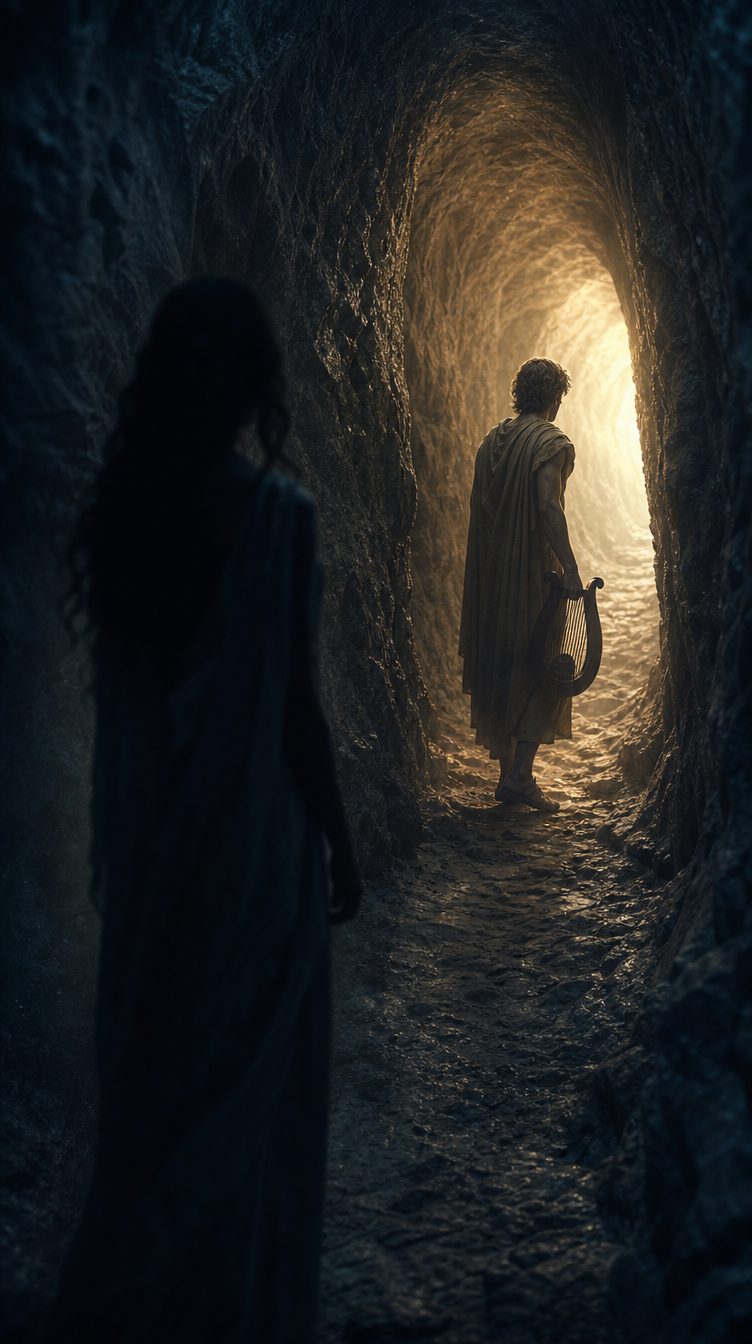
He is choosing certainty. If the gods lied, one glance exposes it. If they did not, one glance destroys everything.
04Why it matters
The section keeps the video's core idea in written form.
So this myth still stings. Orpheus acts out a human reflex: when hope feels unbearable, we sabotage it just to end the waiting. His backward glance is fear making certainty look like wisdom.
05Sources
- Operator pasted frontier-model scriptoperator
06Scene plates


07Further reading
As an Amazon Associate, Avaryn may earn from qualifying purchases.
- Mythos Stephen Fry · intro
- The Greek Myths Robert Graves · deep
- The Birth of Tragedy Friedrich Nietzsche · extended