This folio expands the published Story Prism video into a library record: the narrative spine, source trail, key still scenes, and reading path. The claim stays narrow: Twist first: Medusa is not terrifying because she is evil. She is terrifying because the myth turns injury into guilt. Her gaze matters because it asks who gets called monstrous after violence, and why.
01Story
The story works because its surface action hides a structural problem underneath.
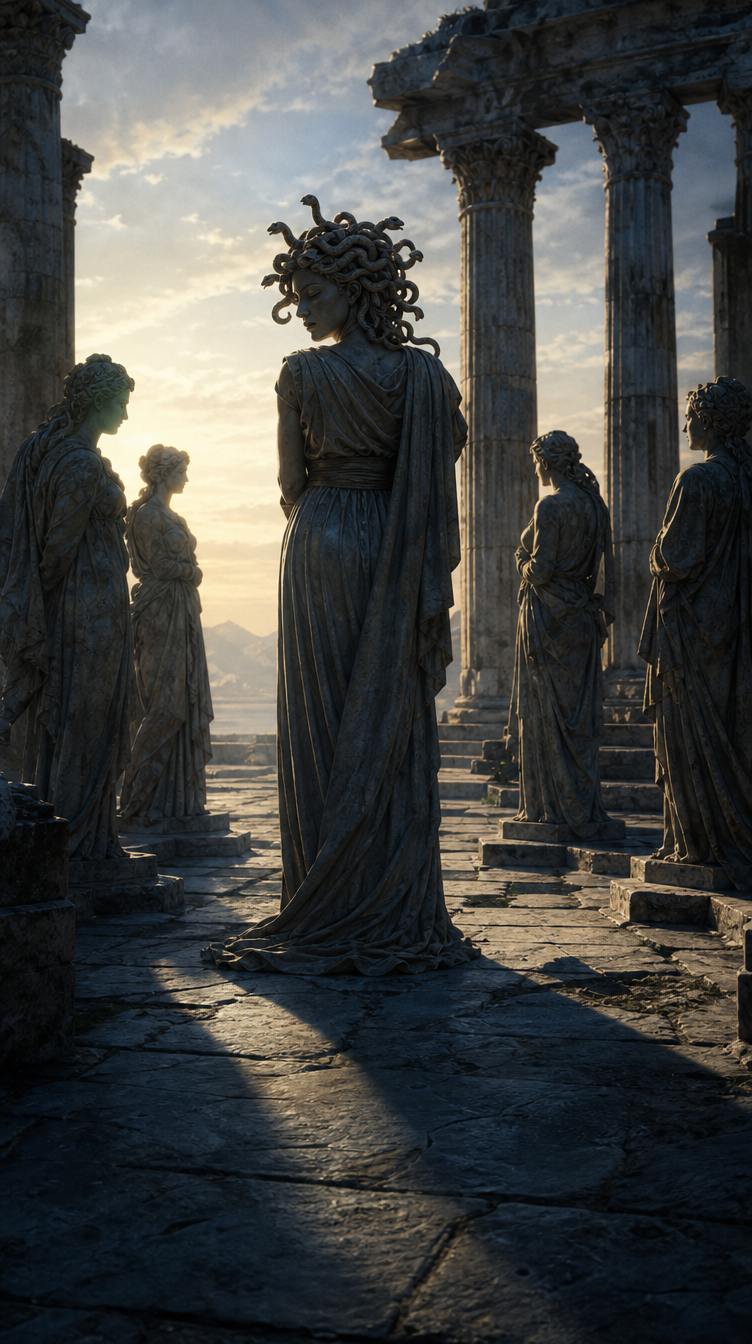
Twist first: Medusa is not terrifying because she is evil. She is terrifying because the myth turns injury into guilt. Her gaze matters because it asks who gets called monstrous after violence, and why.
03Human cost
The section keeps the video's core idea in written form.
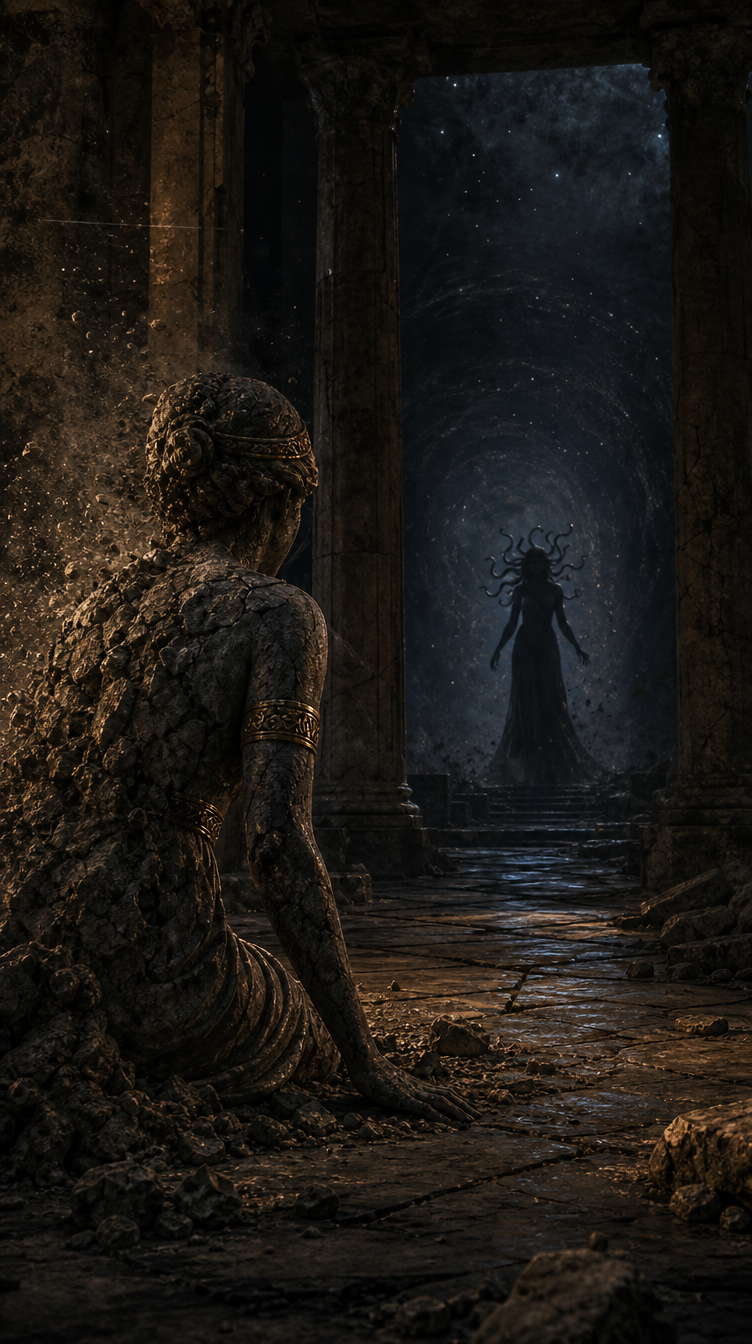
Then the snakes sharpen the point. They make the wound visible. What should accuse the source of harm gets attached to her body instead. The legend protects power by making the aftermath look like her.
04Why it matters
The section keeps the video's core idea in written form.
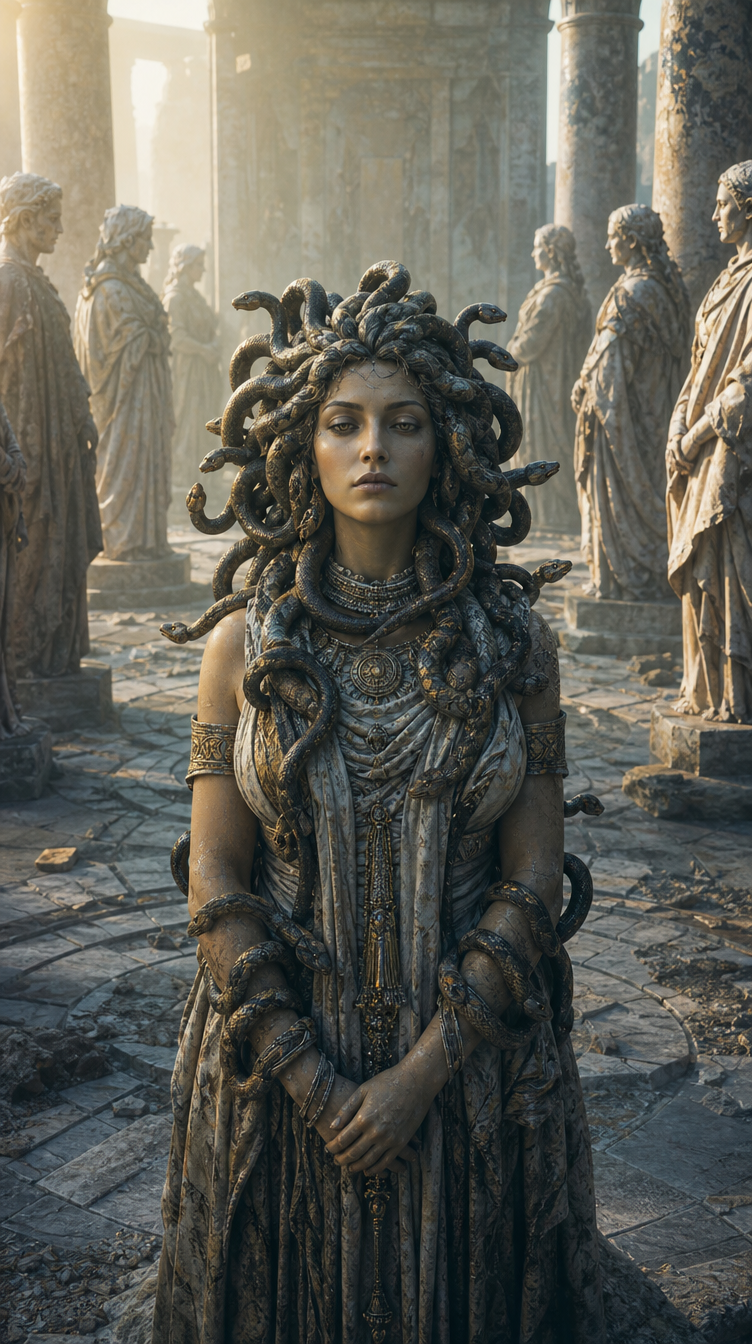
So Medusa still lands. The myth exposes a brutal pattern: people often punish the changed person, not the force that changed them. Once you see that, her face stops being a warning and becomes evidence.
05Sources
This entry follows the published video package. Source links were not attached to this older sidecar.
06Scene plates




07Further reading
As an Amazon Associate, Avaryn may earn from qualifying purchases.
- Women & Power: A Manifesto Mary Beard · intro
- The Body Keeps the Score: Brain, Mind, and Body in the Healing of Trauma Bessel van der Kolk · deep
- The Monstrous-Feminine: Film, Feminism, Psychoanalysis Barbara Creed · extended