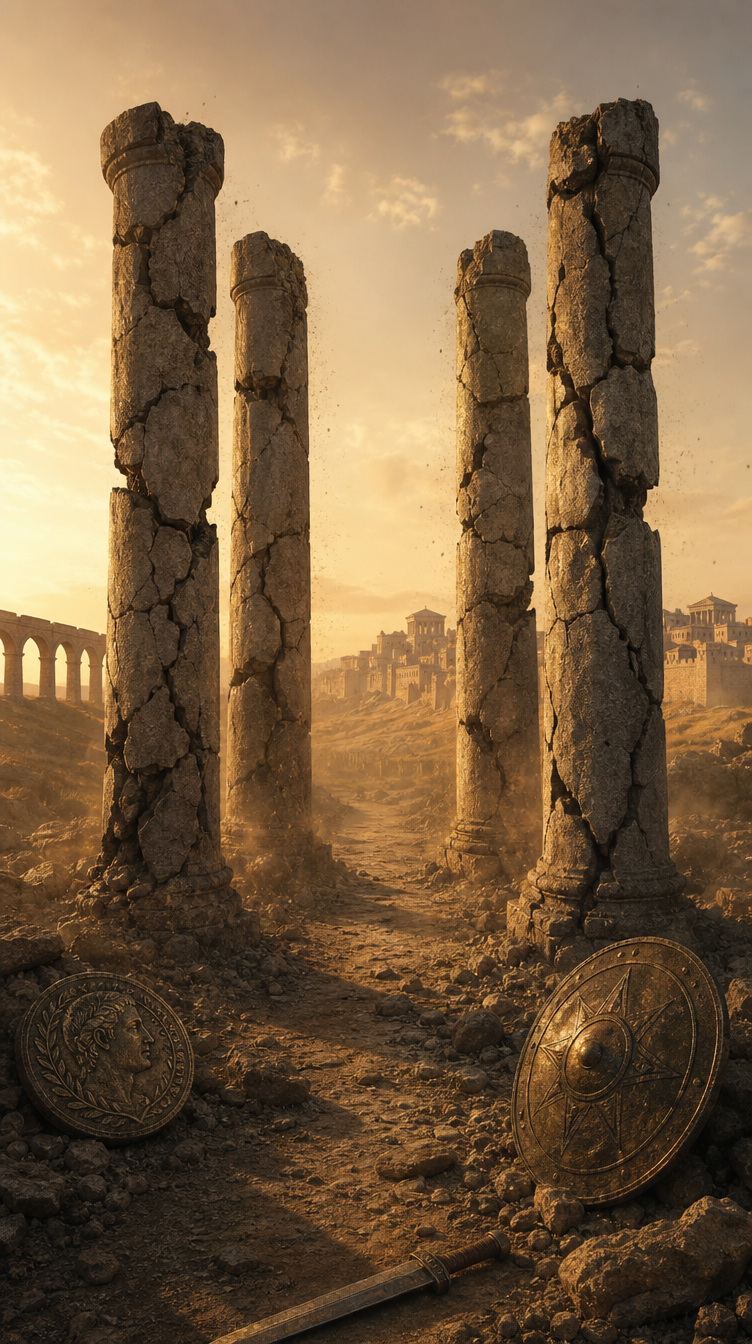
This folio expands the published History video into a library record: the narrative spine, source trail, key still scenes, and reading path. The claim stays narrow: Rome did not fall in one invasion. The Western Empire cracked under four pressures at once: shrinking taxes, unstable emperors, armies loyal to generals, and constant frontier strain. The famous fall.
01Event
The event is best understood as pressure meeting a specific set of tools and choices.
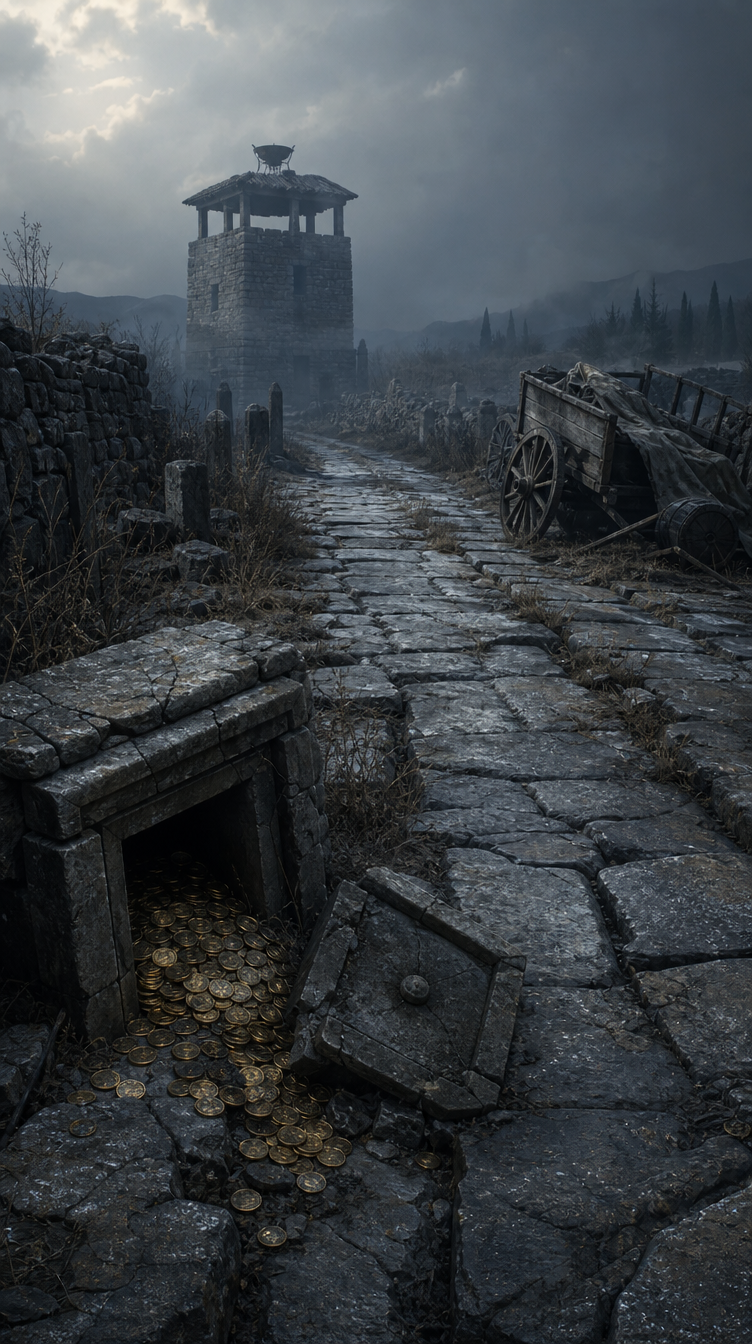
Rome did not fall in one invasion. The Western Empire cracked under four pressures at once: shrinking taxes, unstable emperors, armies loyal to generals, and constant frontier strain. The famous fall. Money was the hidden trap.
02Turning point
The turn arrives when one constraint becomes stronger than every plan around it.
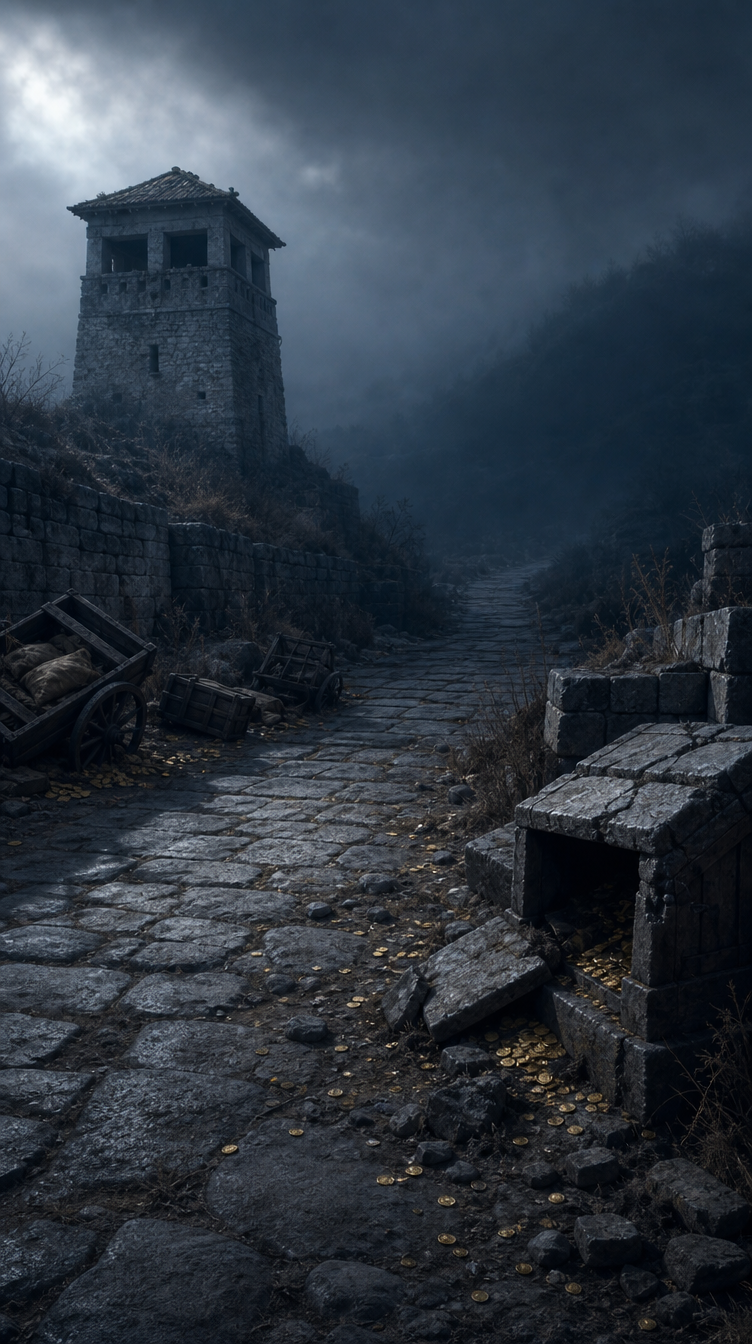
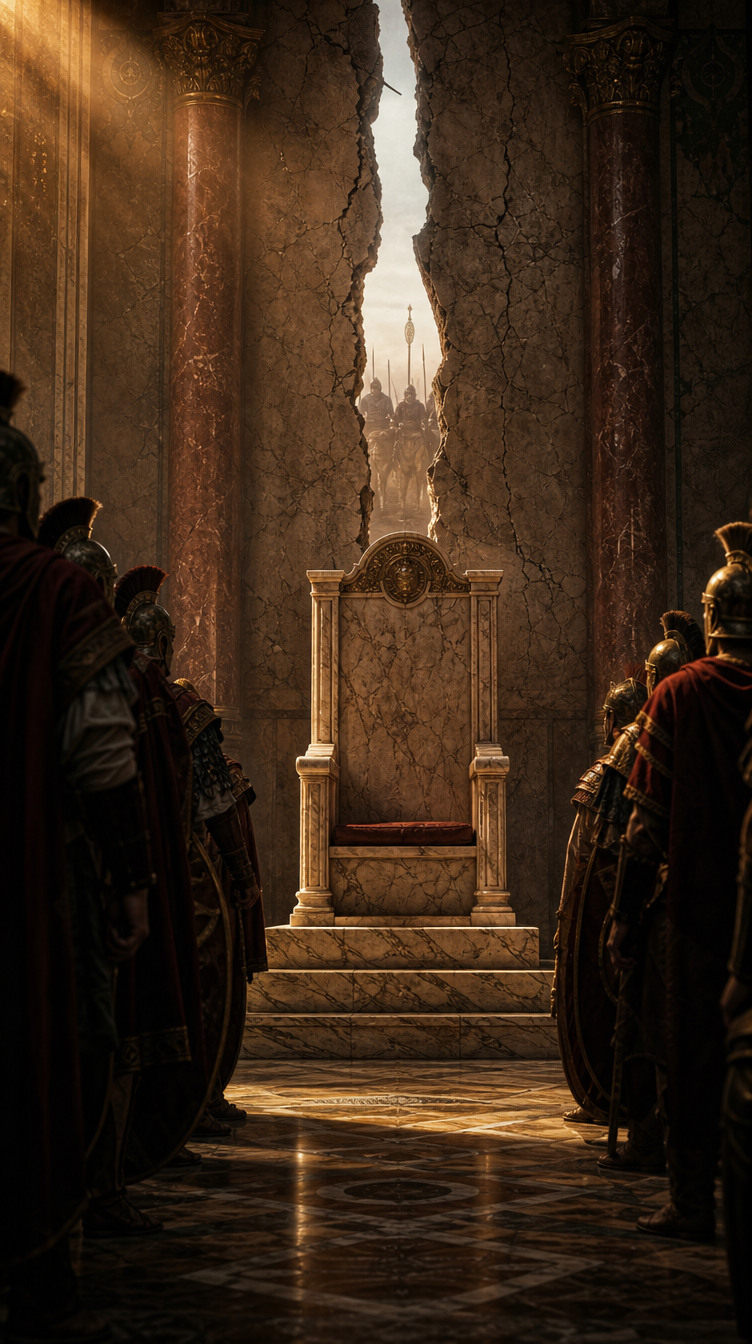
As revenue thinned, roads, garrisons, and officials became harder to maintain. Every lost province shrank the tax base further, so the treasury weakened. Then politics snapped. Emperors rose and fell so fast that generals and court factions held real power.
03Mechanism
The mechanism is the hidden hinge: how ordinary constraints turn into an outcome.
Some troops backed local strongmen. Others served as federates. The Western Roman Empire did not collapse from one battle. So when Romulus Augustulus was deposed in 476, the West was already hollow.
04Consequence
The consequence is what remains after the shock has passed.
Less money meant less control. Less control meant weaker defense. Weaker defense meant fragmentation. Rome fell like a system failing.
05Sources
- Stored inventory preview packetlocal_archive
- Stored preview scriptlocal_archive
06Scene plates



07Further reading
As an Amazon Associate, Avaryn may earn from qualifying purchases.
- The History of the Decline and Fall of the Roman Empire Edward Gibbon · intro
- The Fall of the Roman Empire: A New History of Rome and the Barbarians Peter Heather · deep
- Framing the Early Middle Ages: Europe and the Mediterranean, 400-800 Chris Wickham · extended