This folio expands the published History video into a library record: the narrative spine, source trail, key still scenes, and reading path. The claim stays narrow: At Midway, the Pacific War turned on a strange vulnerability: aircraft carriers were powerful only while their decks stayed organized. Fuel hoses, bombs, torpedoes, and waiting planes made a floating airfield dangerously alive. The American codebreakers did not sink the fleet themselves, but they gave pilots the rarest weapon in naval war: timing.
01Event
The event is best understood as pressure meeting a specific set of tools and choices.
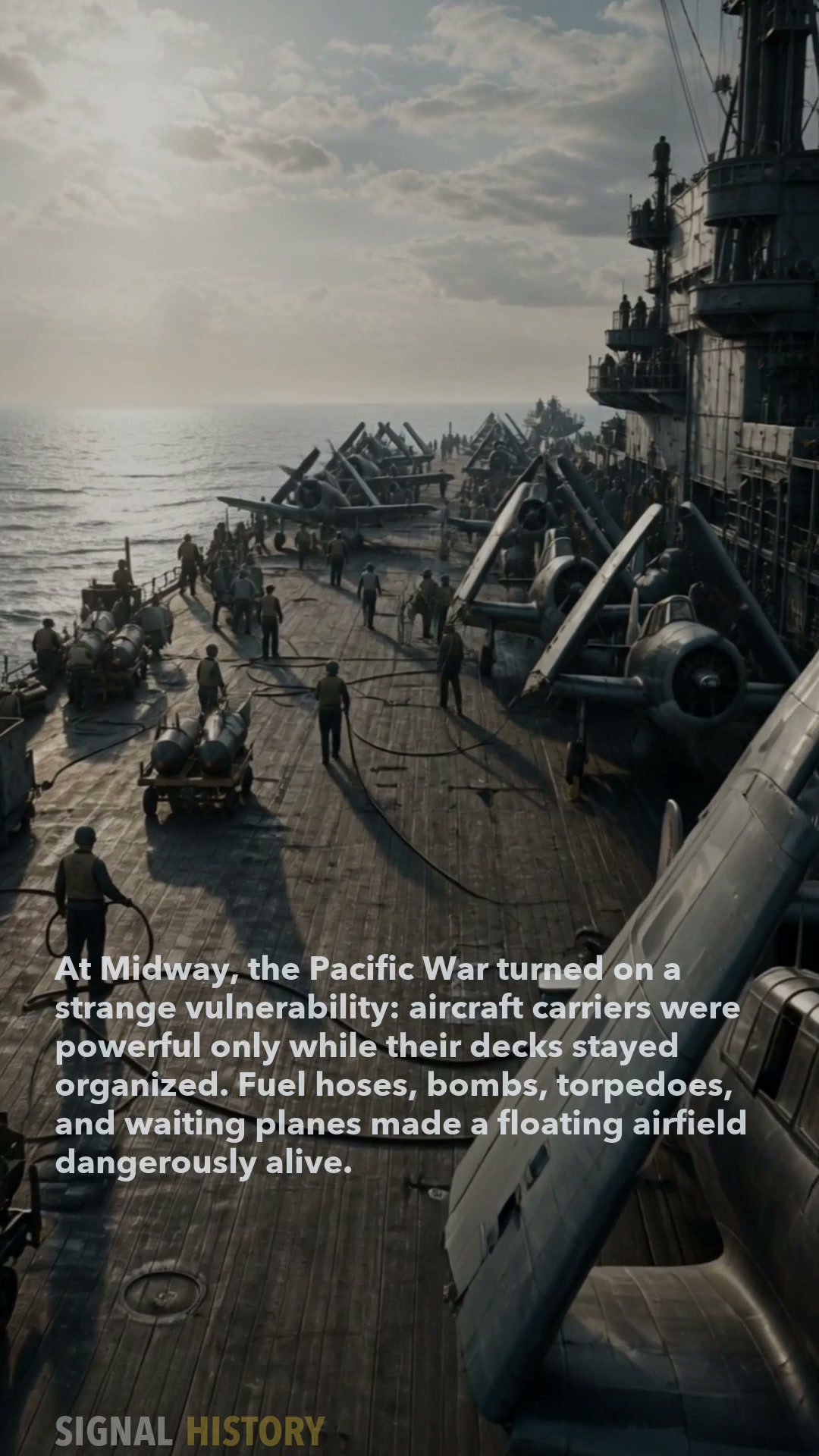
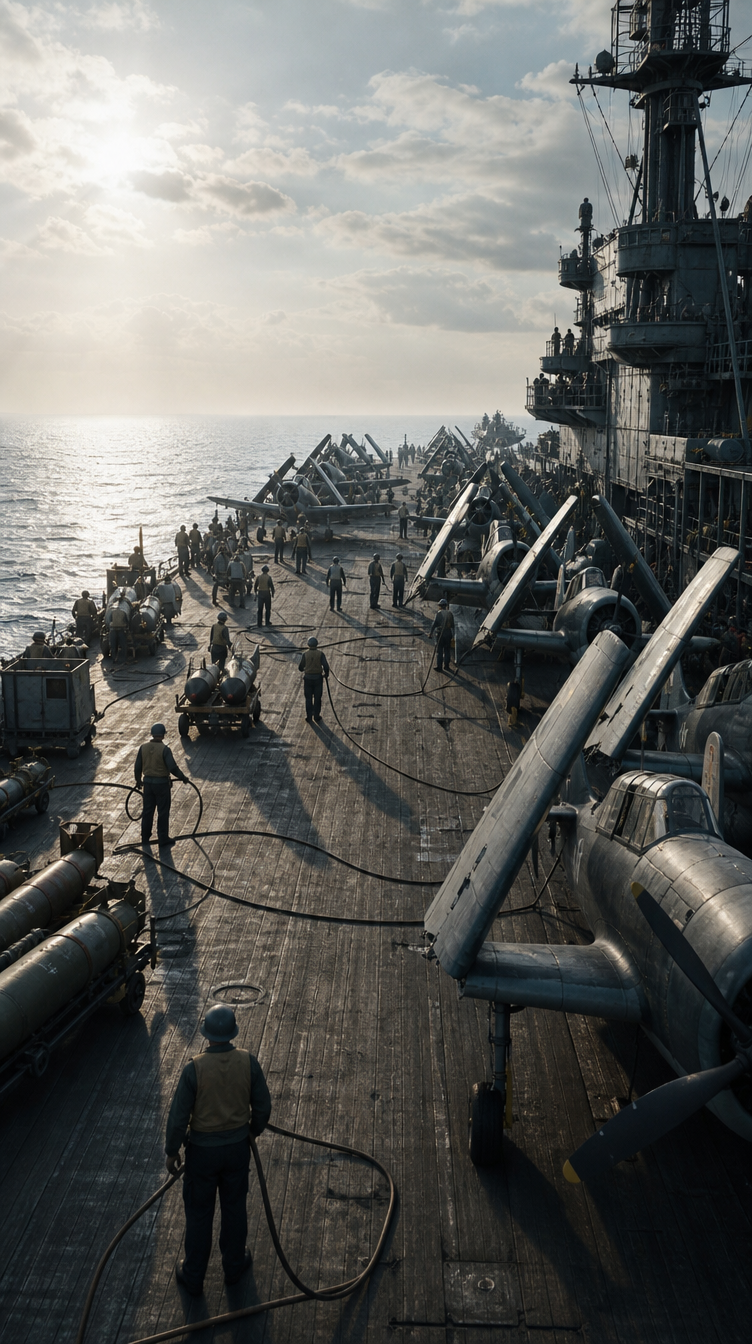
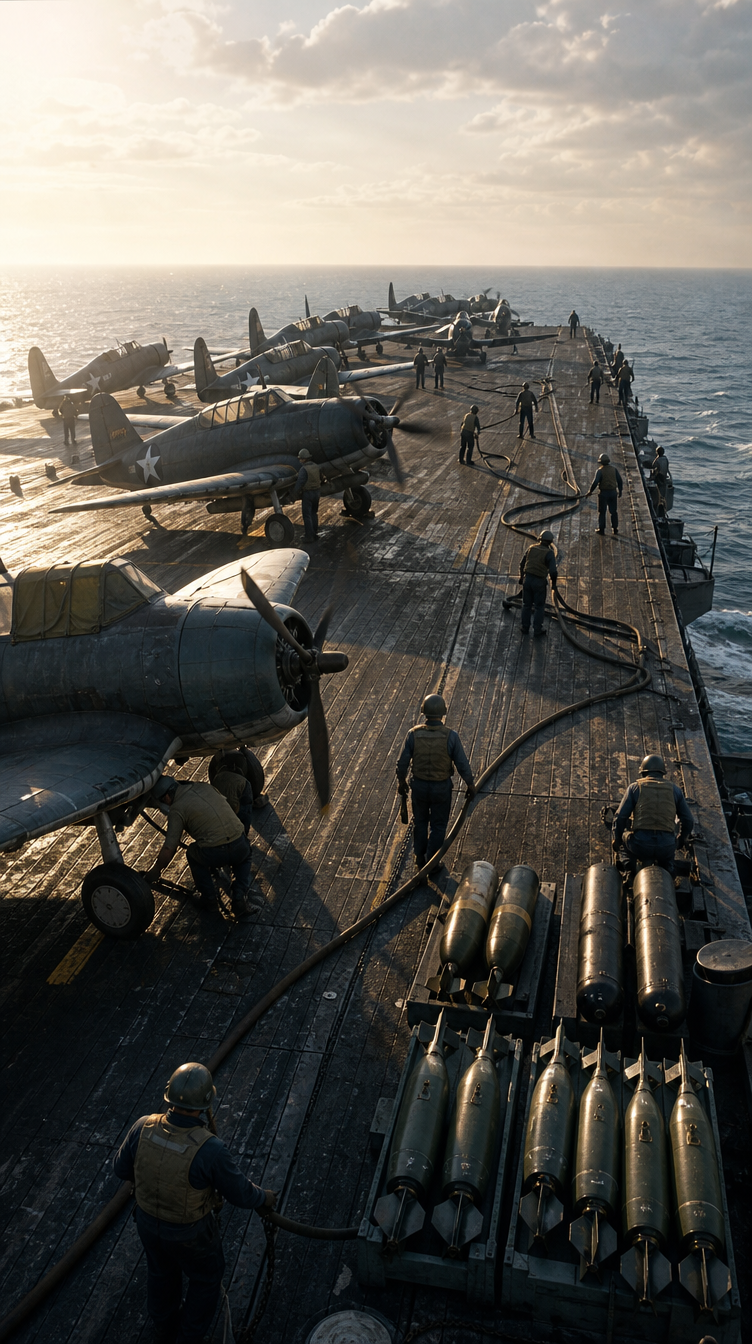
At Midway, the Pacific War turned on a strange vulnerability: aircraft carriers were powerful only while their decks stayed organized. Fuel hoses, bombs, torpedoes, and waiting planes made a floating airfield dangerously alive.
02Turning point
The turn arrives when one constraint becomes stronger than every plan around it.
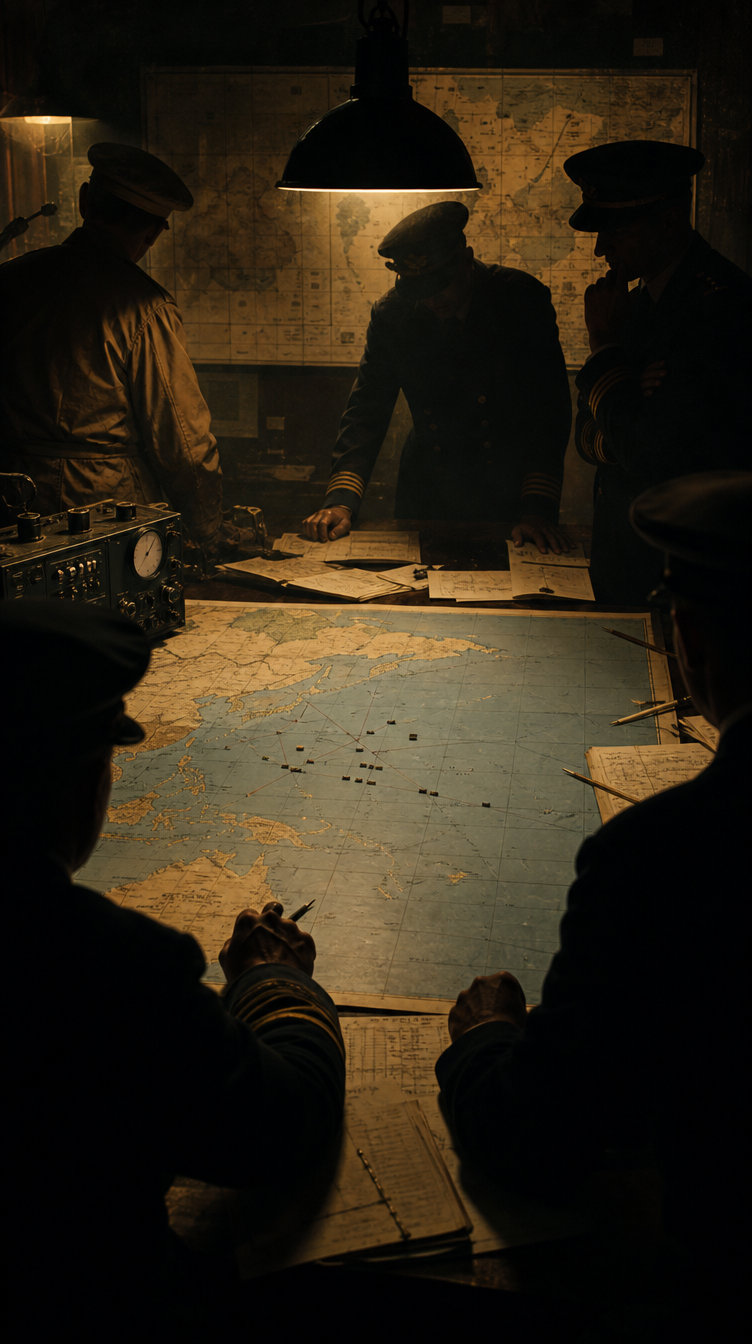
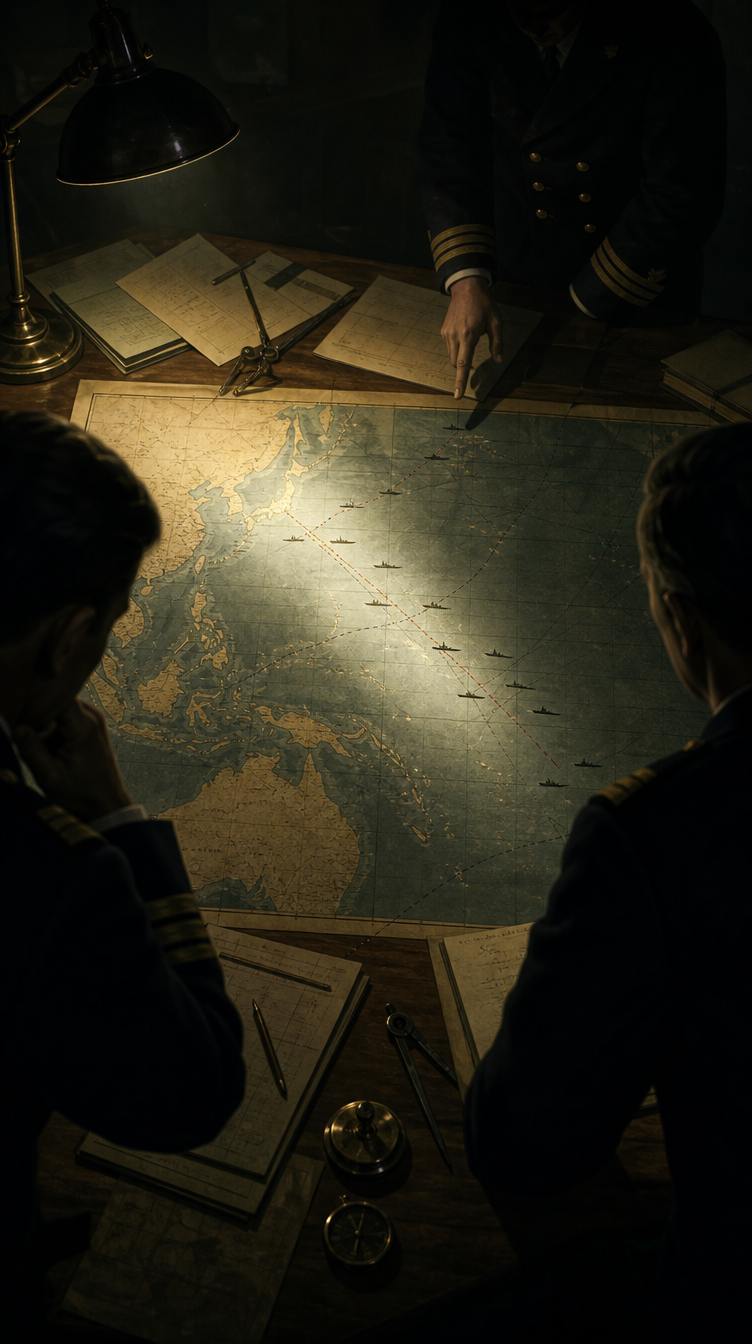
The American codebreakers did not sink the fleet themselves, but they gave pilots the rarest weapon in naval war: timing. They knew where the Japanese carriers had to be.
03Mechanism
The mechanism is the hidden hinge: how ordinary constraints turn into an outcome.
When dive-bombers arrived, minutes mattered more than armor. Japanese decks were rearming aircraft, fighters were low, and one clean angle from above turned preparation into fire.
04Consequence
The consequence is what remains after the shock has passed.
Midway matters because empires can lose balance before they lose strength. The battle was not just courage. It was information finding the exact second when power was exposed.
05Sources
- U.S. Naval History and Heritage Command Battle of Midway overviewpublic
- NSA historical materials on codebreaking before Midwaypublic
06Scene plates


07Further reading
As an Amazon Associate, Avaryn may earn from qualifying purchases.
- Shattered Sword: The Untold Story of the Battle of Midway Jonathan Parshall and Anthony Tully · intro
- Miracle at Midway Gordon W. Prange · deep
- And I Was There: Pearl Harbor and Midway—Breaking the Secrets Edwin T. Layton, Roger Pineau, and John Costello · extended