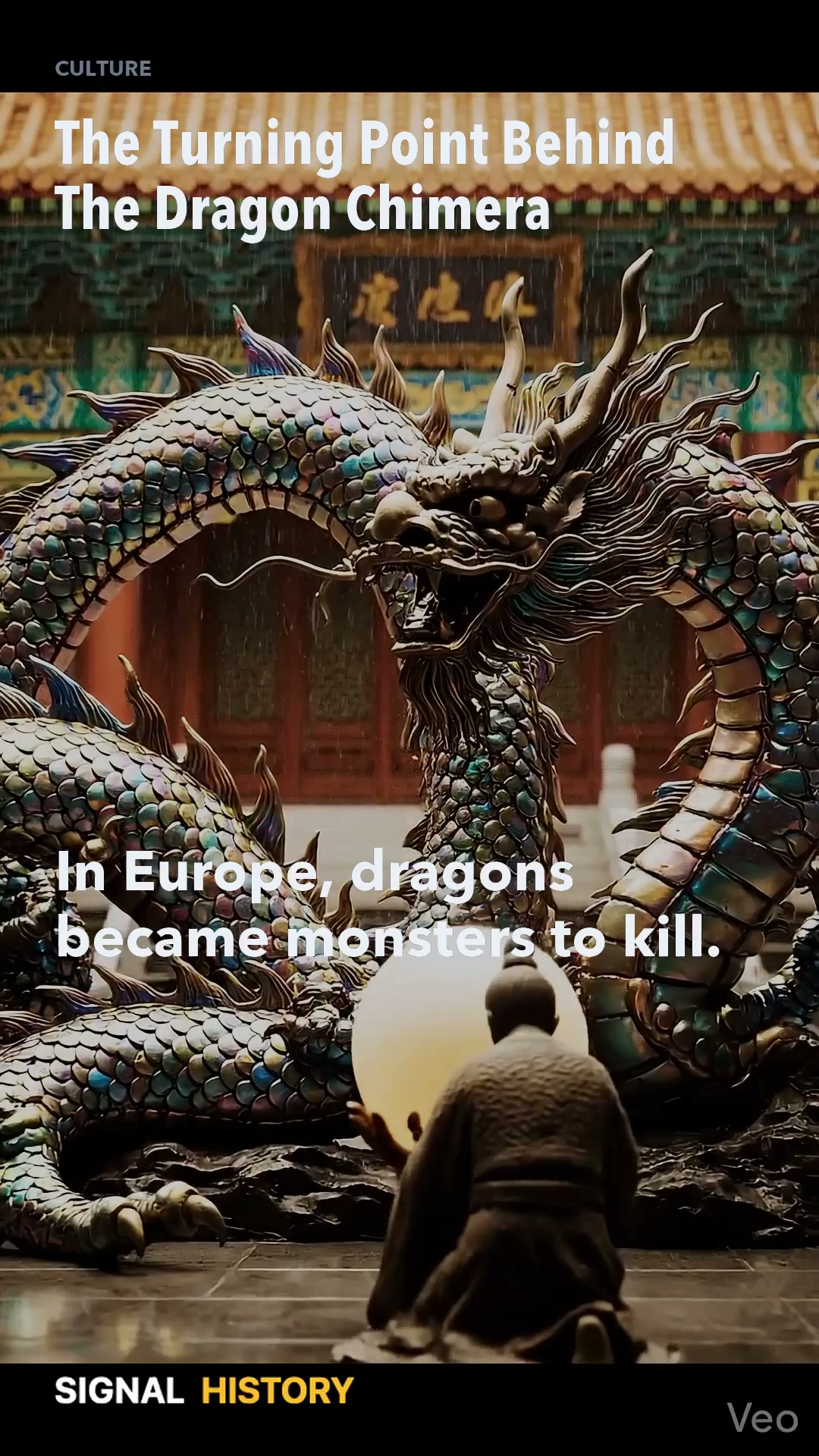
This folio expands the published History video into a library record: the narrative spine, source trail, key still scenes, and reading path. The claim stays narrow: Same dragon, opposite fate. In Europe, dragons became monsters to kill. In East Asia, they brought rain, rule, and balance.
01Event
The event is best understood as pressure meeting a specific set of tools and choices.
Same dragon, opposite fate. In Europe, dragons became monsters to kill. In East Asia, they brought rain, rule, and balance. One chimera body entered two story worlds and came out morally reversed.
02Turning point
The turn arrives when one constraint becomes stronger than every plan around it.
Why did that split stick? Because dragons felt almost believable. Claws, scales, horns, fangs. Built from familiar animals, they gave storytellers a sturdy shape for bigger ideas like danger, protection, kingship, and order.
03Mechanism
The mechanism is the hidden hinge: how ordinary constraints turn into an outcome.
Then the meanings hardened. In Europe, dragons poisoned water, burned fields, blocked roads, and hoarded treasure until a hero slew them. In East Asia, they ruled storms and rivers, dangerous yet life-giving, and linked to rightful power. That is the turning point.
04Consequence
The consequence is what remains after the shock has passed.
Anatomy never decided what dragons meant. Culture did. People rebuilt the same beast around local fears, needs, and ideas of order, which is why both versions still feel strangely convincing today.
05Sources
- TED-Edpublic
- Extra Historypublic
- Learn Chinese Nowresearch_note
06Scene plates


07Further reading
As an Amazon Associate, Avaryn may earn from qualifying purchases.
- The Hero with a Thousand Faces Joseph Campbell · intro
- The First Fossil Hunters: Dinosaurs, Mammoths, and Myth in Greek and Roman Times Adrienne Mayor · deep
- Purity and Danger: An Analysis of Concepts of Pollution and Taboo Mary Douglas · extended