This folio expands the published History video into a library record: the narrative spine, source trail, key still scenes, and reading path. The claim stays narrow: What doomed Tsushima? Distance. Russia’s Baltic Fleet steamed 18,000 miles, burned coal, exhausted crews, and reached the strait already fading.
01Event
The event is best understood as pressure meeting a specific set of tools and choices.
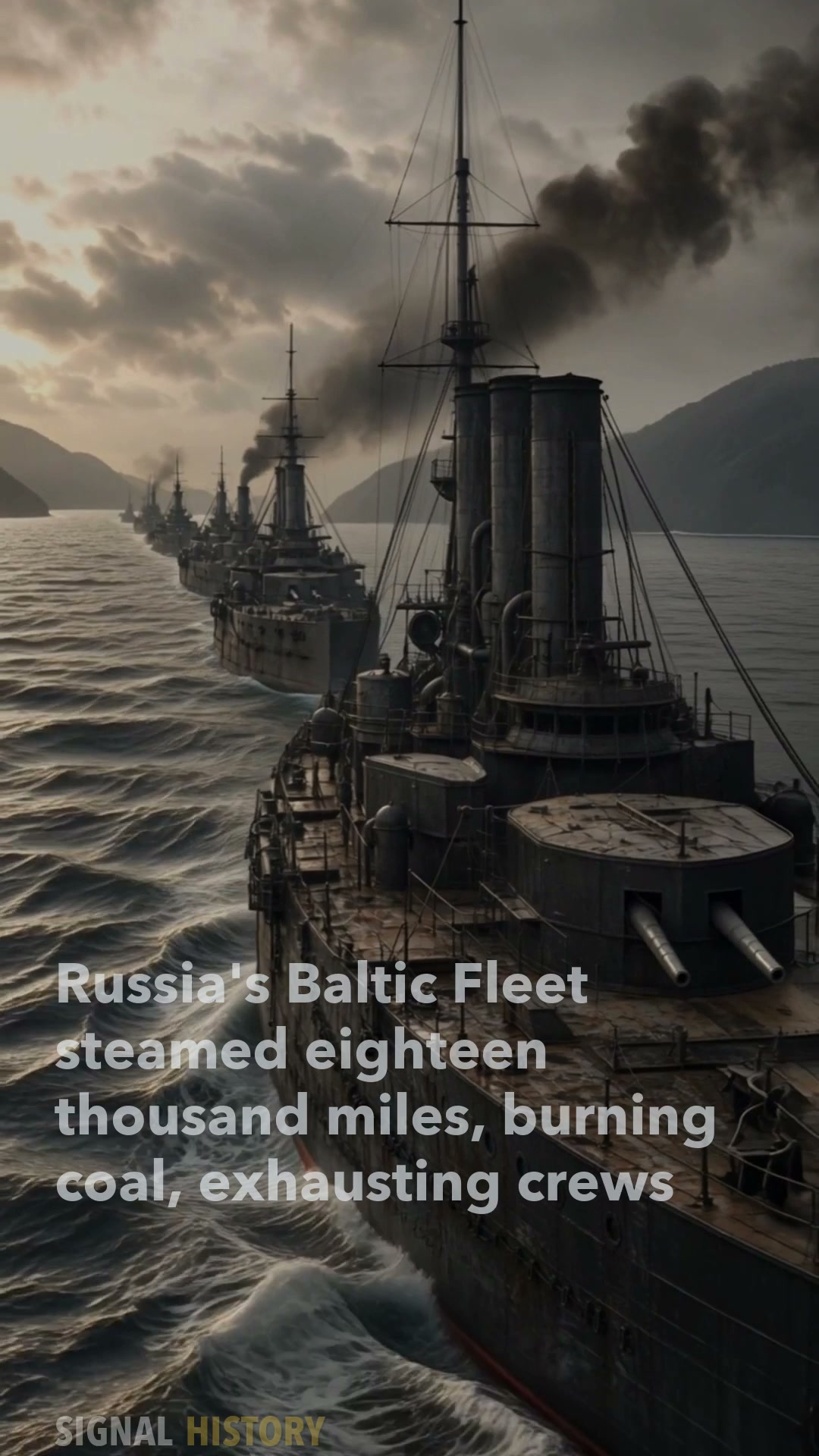
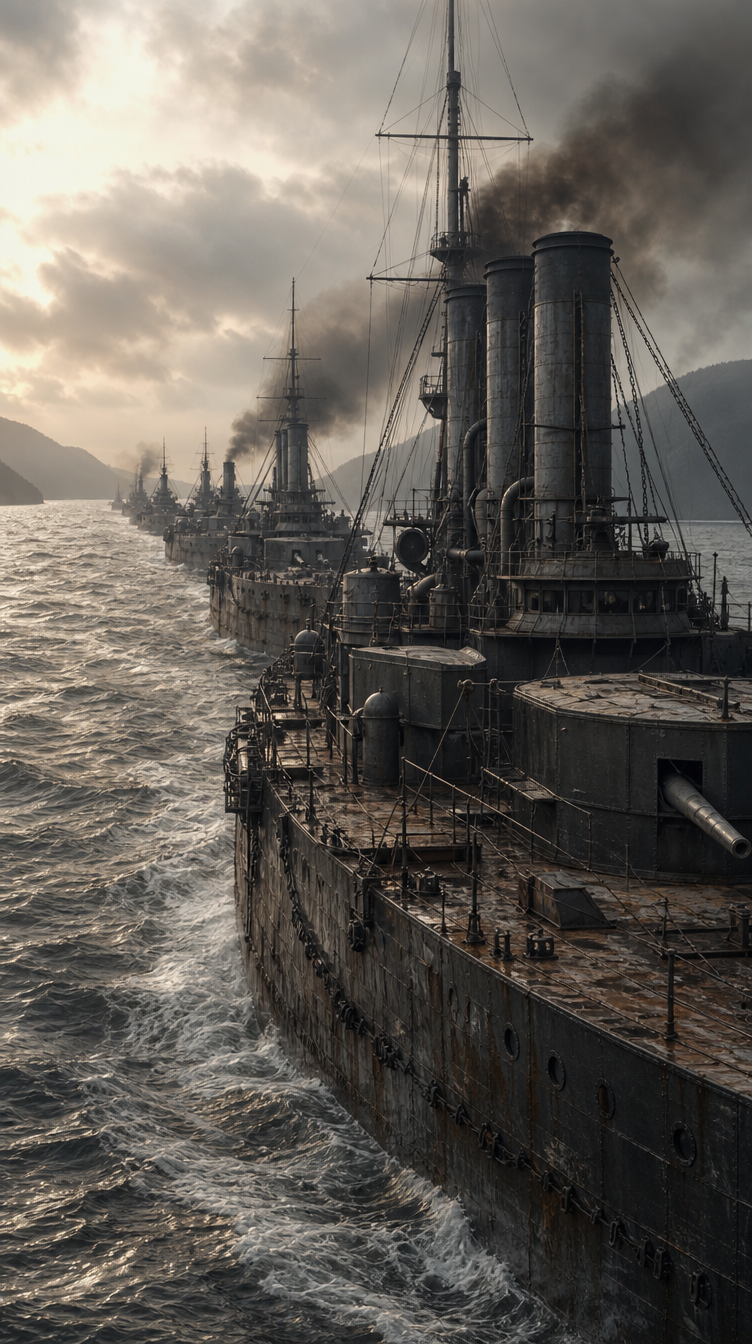
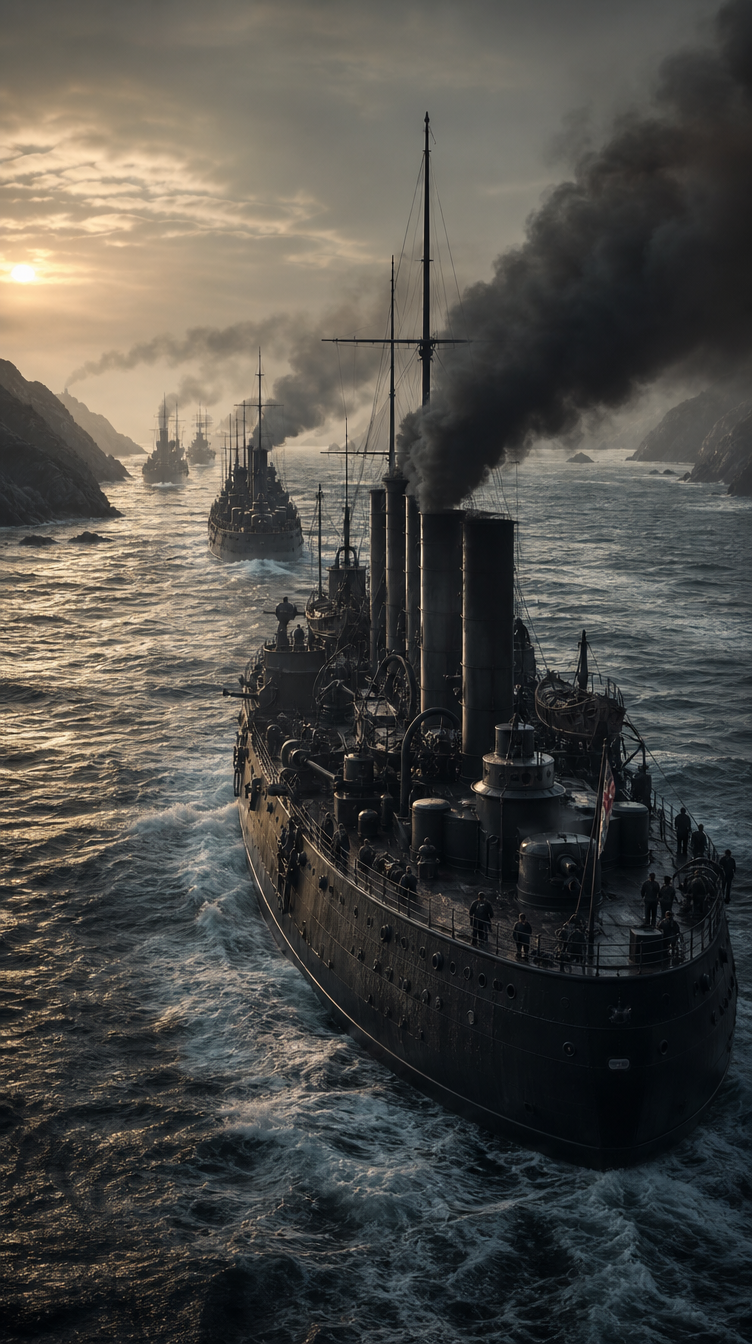
What doomed Tsushima? Distance. Russia's Baltic Fleet steamed eighteen thousand miles, burning coal, exhausting crews, and reaching the strait already worn down, with tired ships and tired men. Japan struck at the decisive question. Who could aim first and turn faster?
02Turning point
The turn arrives when one constraint becomes stronger than every plan around it.
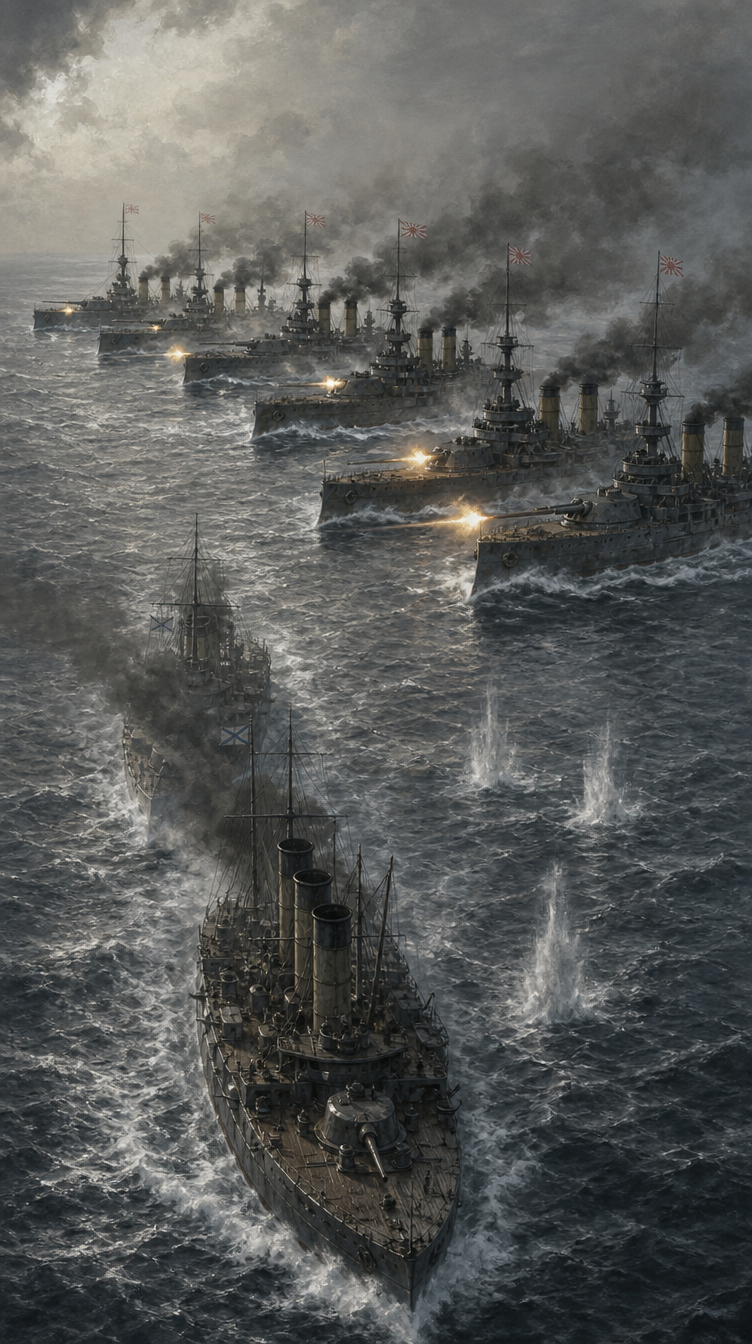
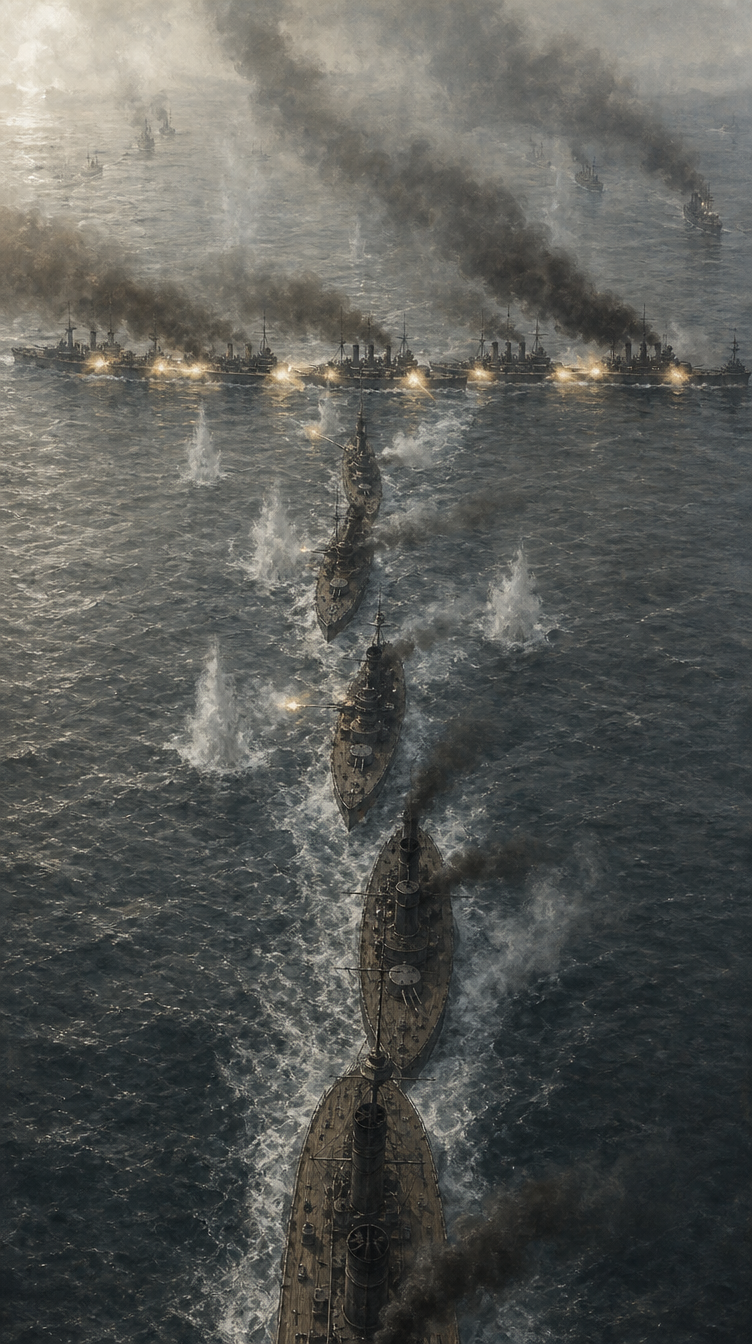
Admiral Togo crossed the T. His line cut across Russia's column, letting Japanese ships fire full broadsides while Russians answered mostly with forward guns. One fleet used nearly everything. The other used a fraction.
03Mechanism
The mechanism is the hidden hinge: how ordinary constraints turn into an outcome.
Faster Japanese ships held their chosen range, and shell hits tore through bridges, decks, and fire control. Once Russian leaders lost speed and direction, the column became a slow target.
04Consequence
The consequence is what remains after the shock has passed.
Tsushima proved courage and armor were no longer enough. Modern naval war would belong to fleets that moved faster, shot sooner, and controlled the angle.
05Sources
06Scene plates


07Further reading
As an Amazon Associate, Avaryn may earn from qualifying purchases.
- The Tsar's Last Armada: The Epic Voyage to the Battle of Tsushima Constantine Pleshakov · intro
- The Battle of Tsushima Rotem Kowner · deep
- Military Innovation in the Interwar Period Williamson Murray · extended