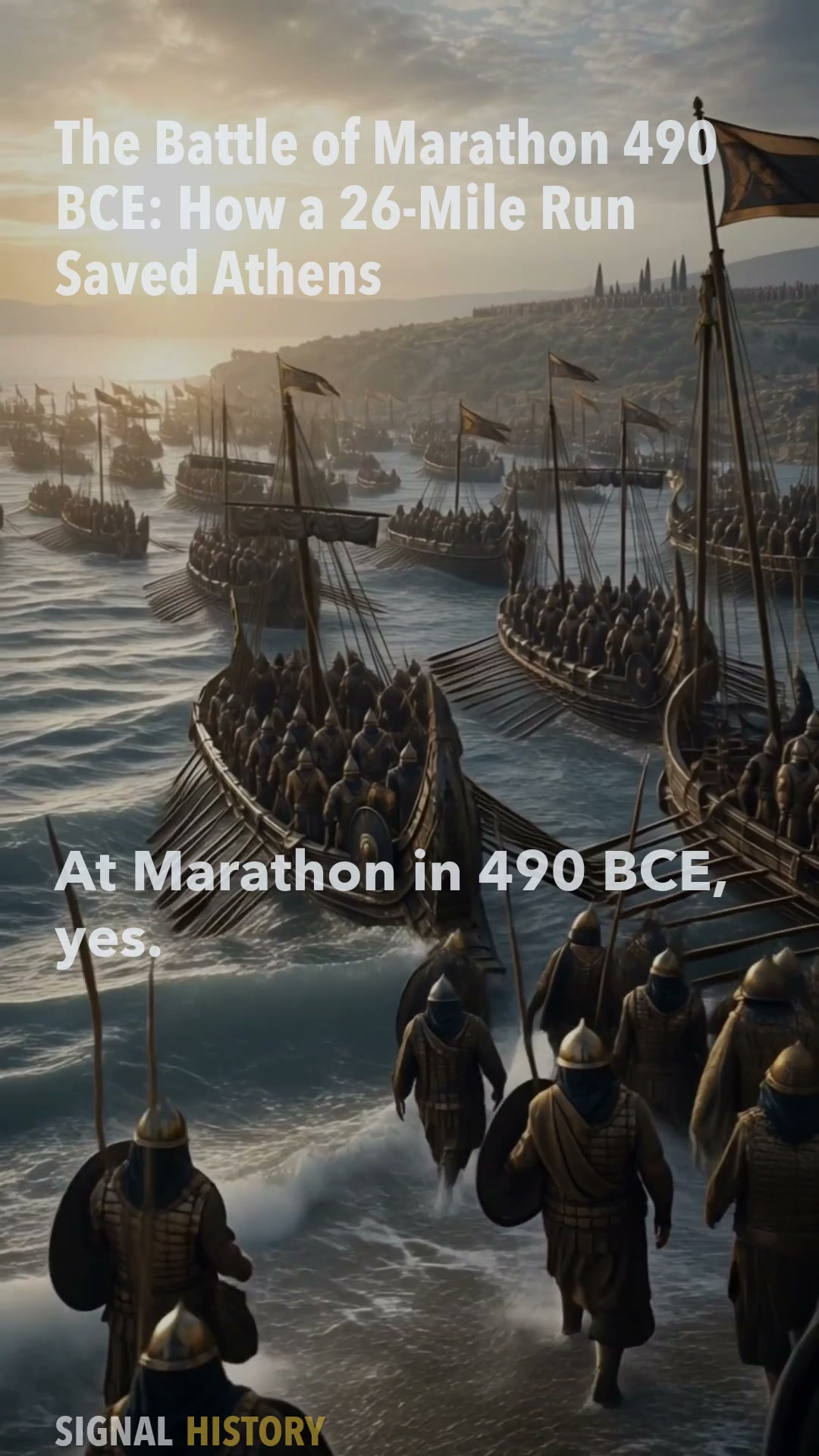
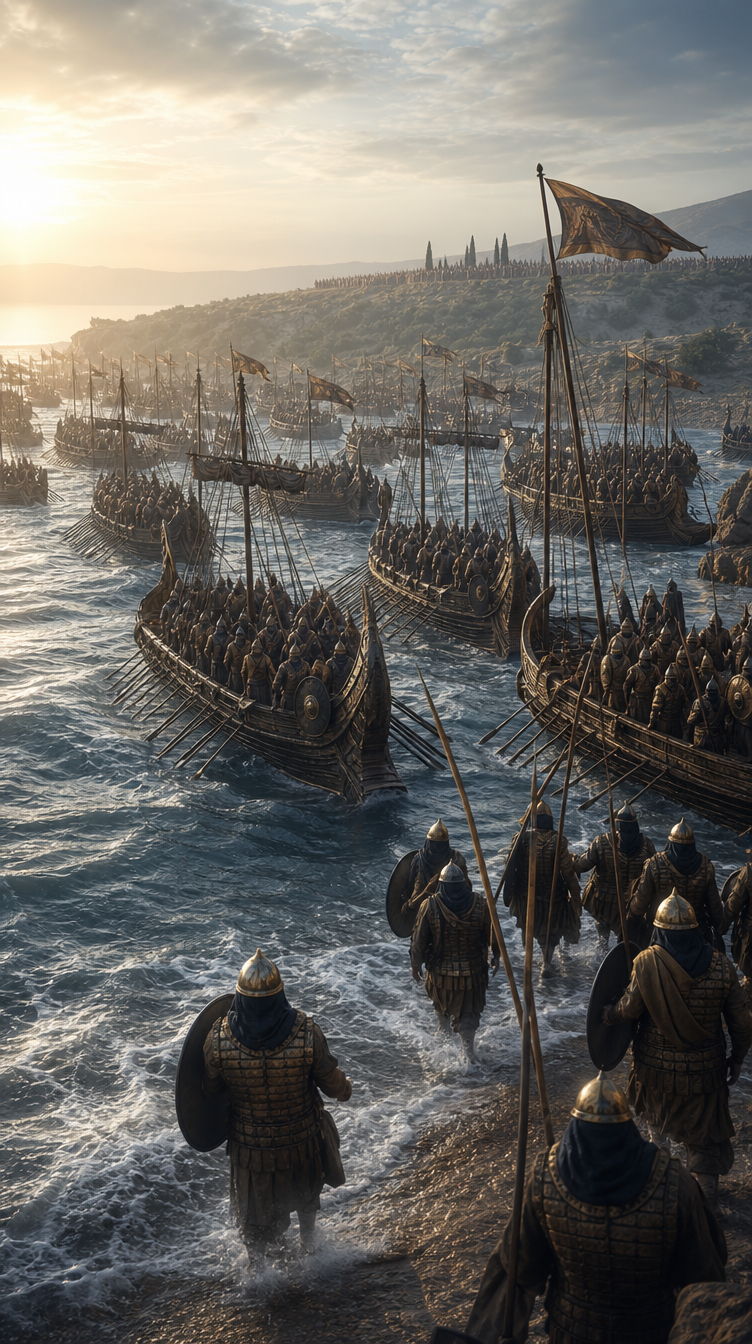
This folio expands the published History video into a library record: the narrative spine, source trail, key still scenes, and reading path. The claim stays narrow: A run saved Athens? At Marathon in 490 BCE, yes. Six hundred Persian ships landed 25,000 men just 26 miles from Athens.
01Event
The event is best understood as pressure meeting a specific set of tools and choices.
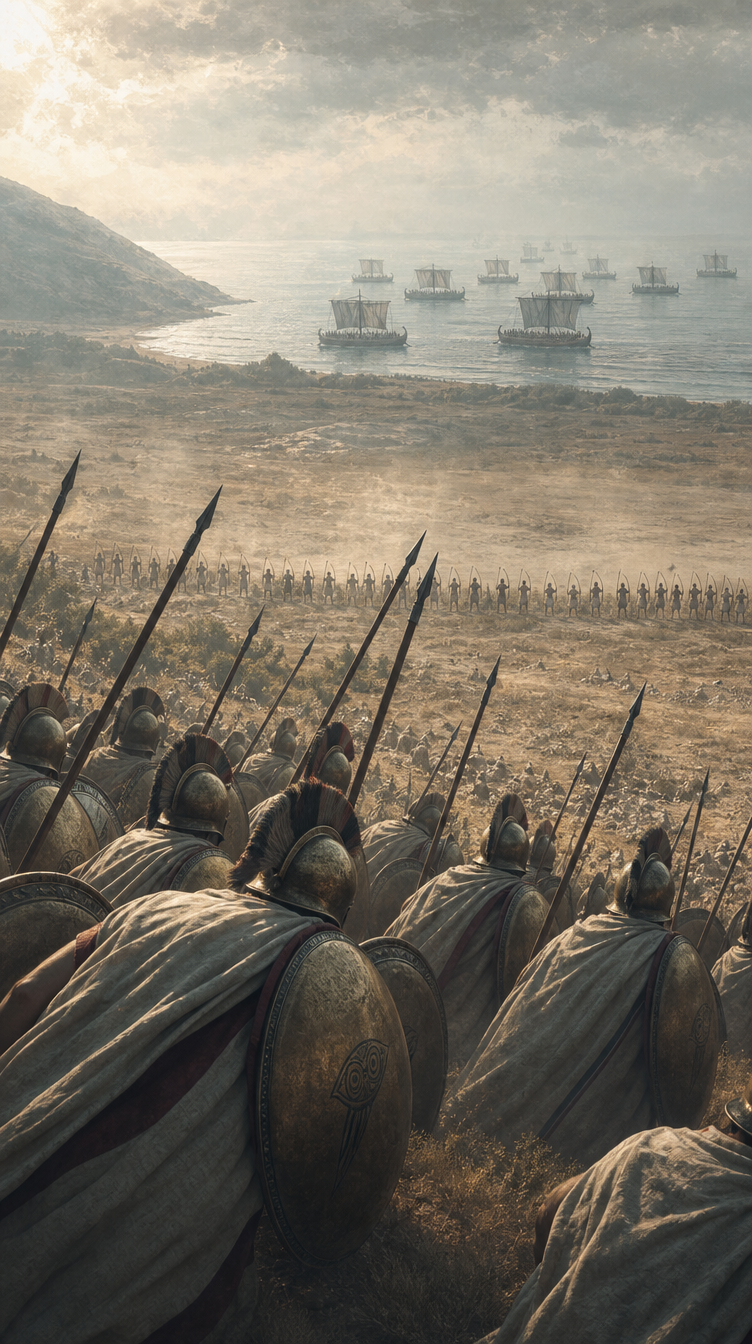
A run saved Athens? At Marathon in 490 BCE, yes. Six hundred Persian ships landed 25,000 men just 26 miles from Athens. Only 10,000 Athenian hoplites held the hills above the beach.
02Turning point
The turn arrives when one constraint becomes stronger than every plan around it.
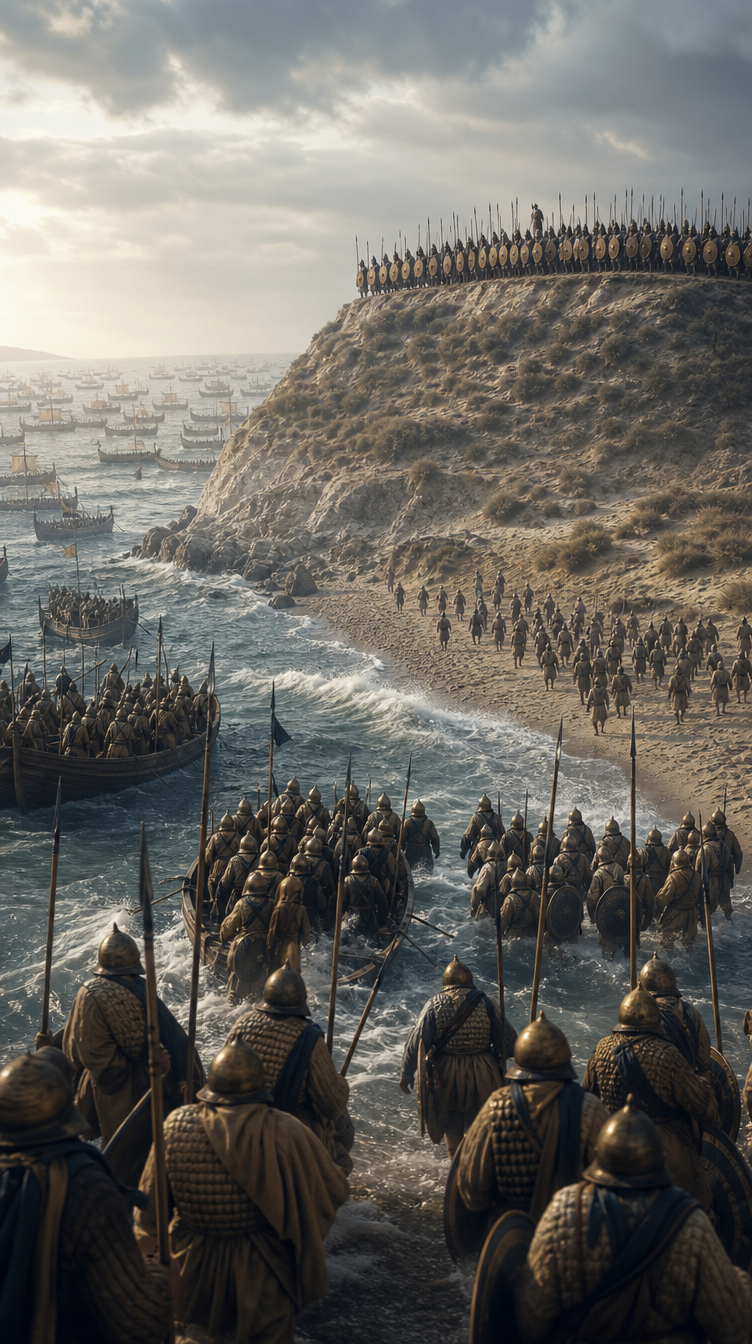
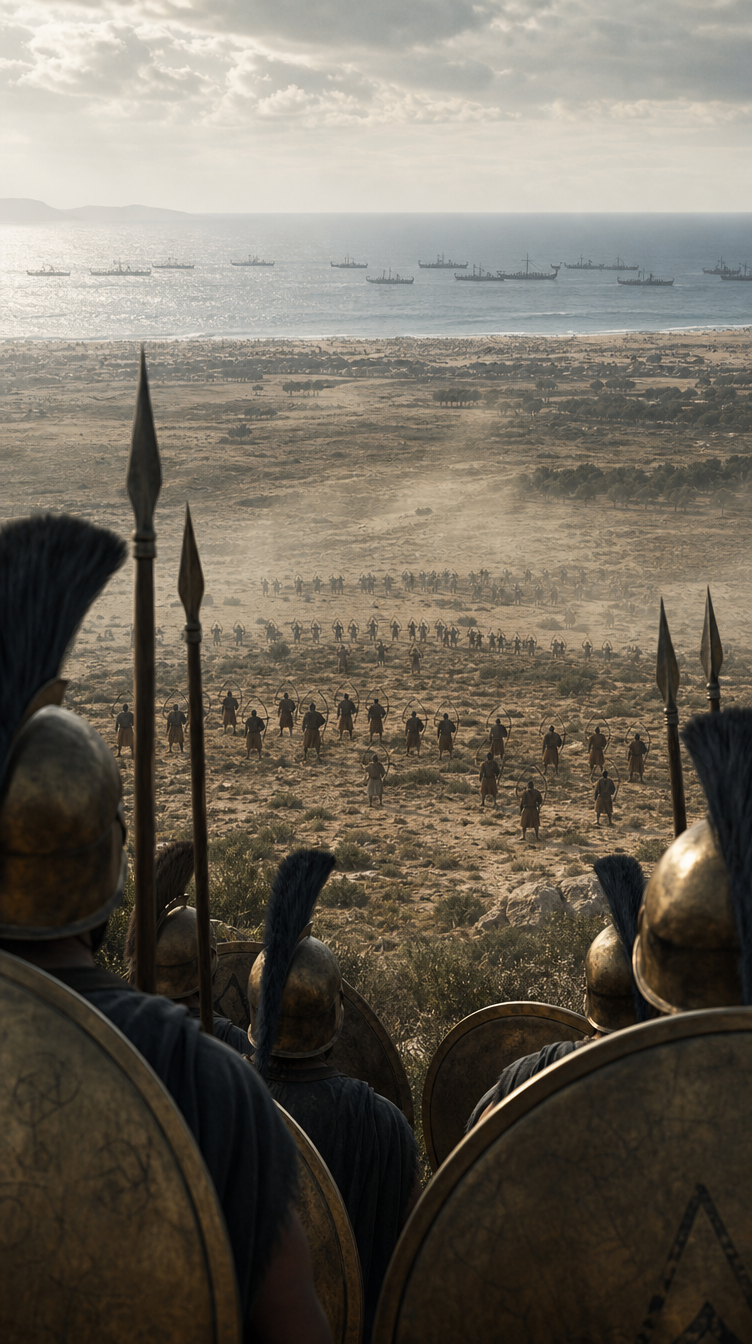
The Athenians were not hesitating. They stayed on high ground because Persian archers owned the flat plain. But waiting could lose everything. The fleet could re-embark.
03Mechanism
The mechanism is the hidden hinge: how ordinary constraints turn into an outcome.
10,000 Athenians charging downhill into Persian archers is the prism. So distance became a weapon. Ten thousand hoplites charged downhill into Persian archers, shrinking the deadly time under arrows. Once shields smashed together, range stopped mattering.
04Consequence
The consequence is what remains after the shock has passed.
Then came the second race. A runner covered the same 26 miles to Athens so the city could arm before the fleet arrived. So Marathon mattered twice: they won the battle.
05Sources
- Signal Library research source 1research_note
- Signal Library research source 2research_note
06Scene plates


07Further reading
As an Amazon Associate, Avaryn may earn from qualifying purchases.
- Lords of the Sea: The Epic Story of the Athenian Navy and the Birth of Democracy John R. Hale · intro
- Marathon: The Battle That Changed Western Civilization Richard A. Billows · deep
- The Greek Way of War: The Myth of the Hoplite Battle Hans van Wees · extended