This folio expands the published History video into a library record: the narrative spine, source trail, key still scenes, and reading path. The claim stays narrow: How do you destroy a bigger army? At Cannae in 216 BCE, Hannibal used geometry. He did not stop Rome's charge.
01Event
The event is best understood as pressure meeting a specific set of tools and choices.
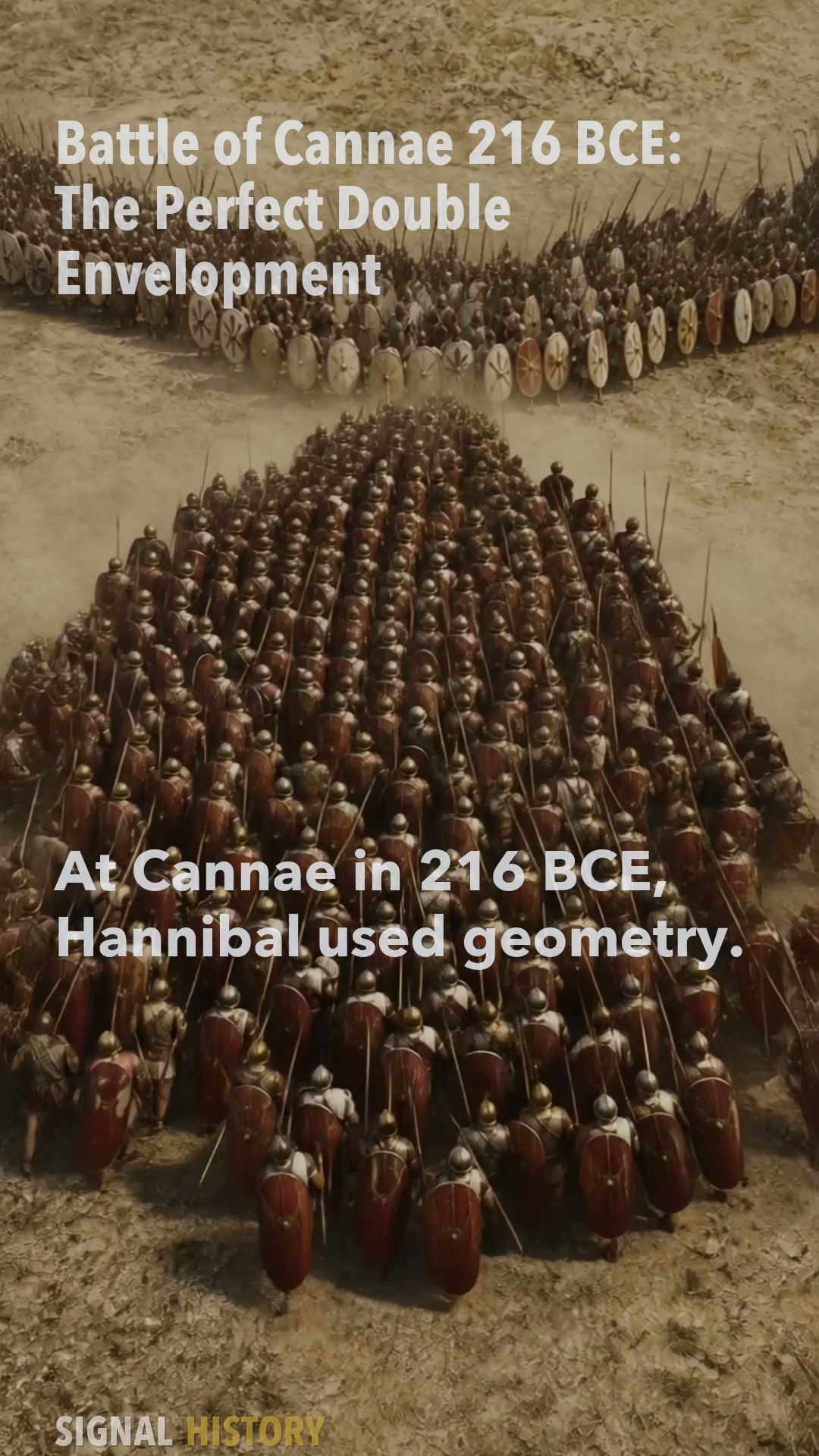
How do you destroy a bigger army? At Cannae in 216 BCE, Hannibal used geometry. He did not stop Rome's charge. He let it surge forward, turning confidence into the first step of a trap.
02Turning point
The turn arrives when one constraint becomes stronger than every plan around it.
Rome had one instinct: crush the center. Hannibal built for that habit. He placed a bulging middle line out front, looking weak, almost beaten, so every shove bent the battle exactly where he wanted. Then winning became the trap.
03Mechanism
The mechanism is the hidden hinge: how ordinary constraints turn into an outcome.
Romans pressed deeper but packed tighter. Hannibal's wings swung inward from both sides while cavalry sealed the rear. Advance became enclosure. Hannibal did not overpower Rome.
04Consequence
The consequence is what remains after the shock has passed.
He let Rome overpower itself. A bigger army, packed too tight to turn or breathe, became easiest to destroy. The deadliest weapon at Cannae was the space Rome gave away.
05Sources
- Hannibal's Masterpiece - Cannae 216 BC - Second Punic War DOCUMENTARYpublic
- 80,000 Men Surrounded - The Disaster of Cannae (216 BC) DOCUMENTARYpublic
- Battle of Cannae in 1 minute using Google Earthresearch_note
06Scene plates


07Further reading
As an Amazon Associate, Avaryn may earn from qualifying purchases.
- The Ghosts of Cannae: Hannibal and the Darkest Hour of the Roman Republic Robert L. O'Connell · intro
- The Punic Wars Adrian Goldsworthy · deep
- The Western Way of War: Infantry Battle in Classical Greece Victor Davis Hanson · extended