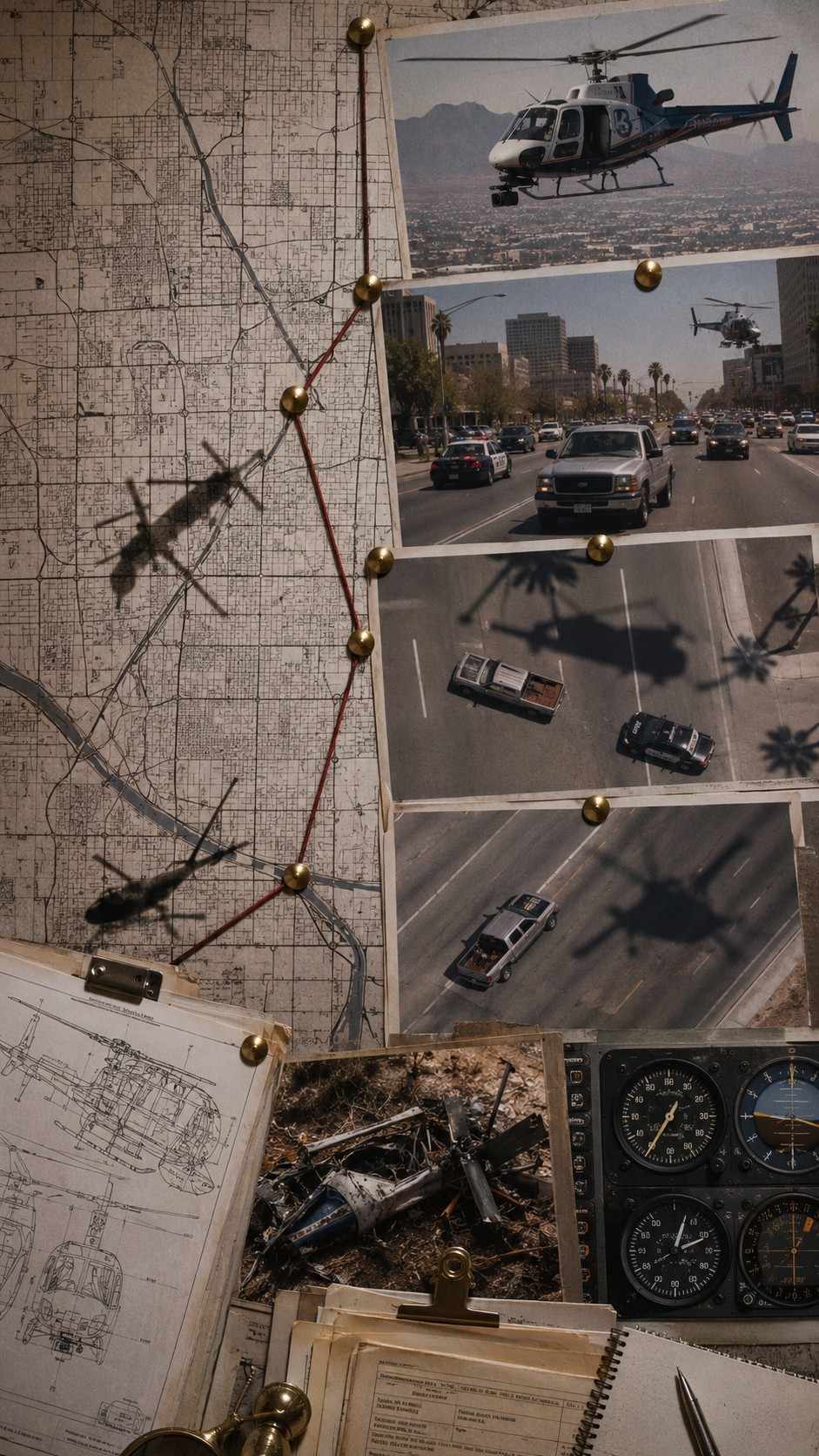
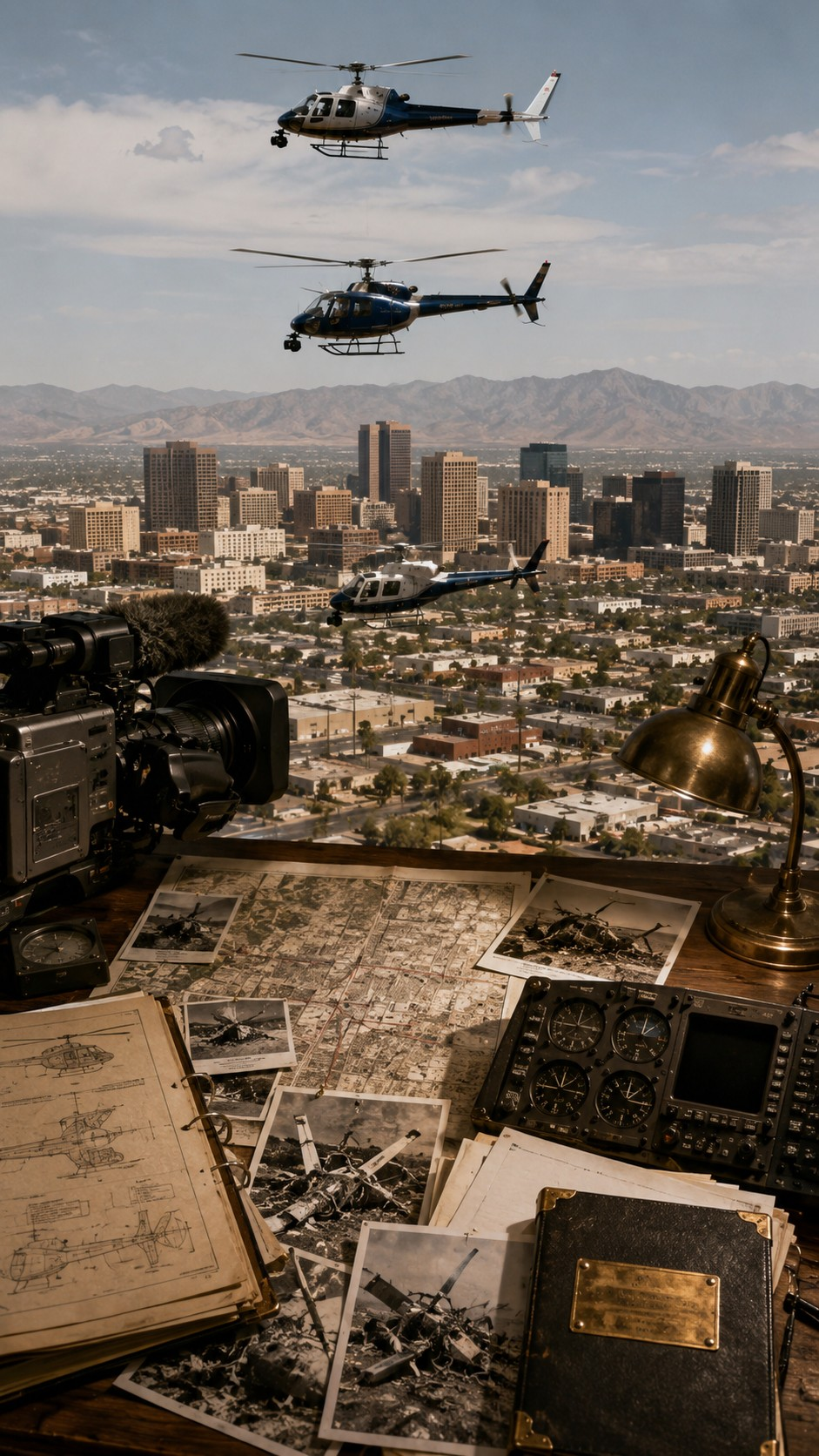
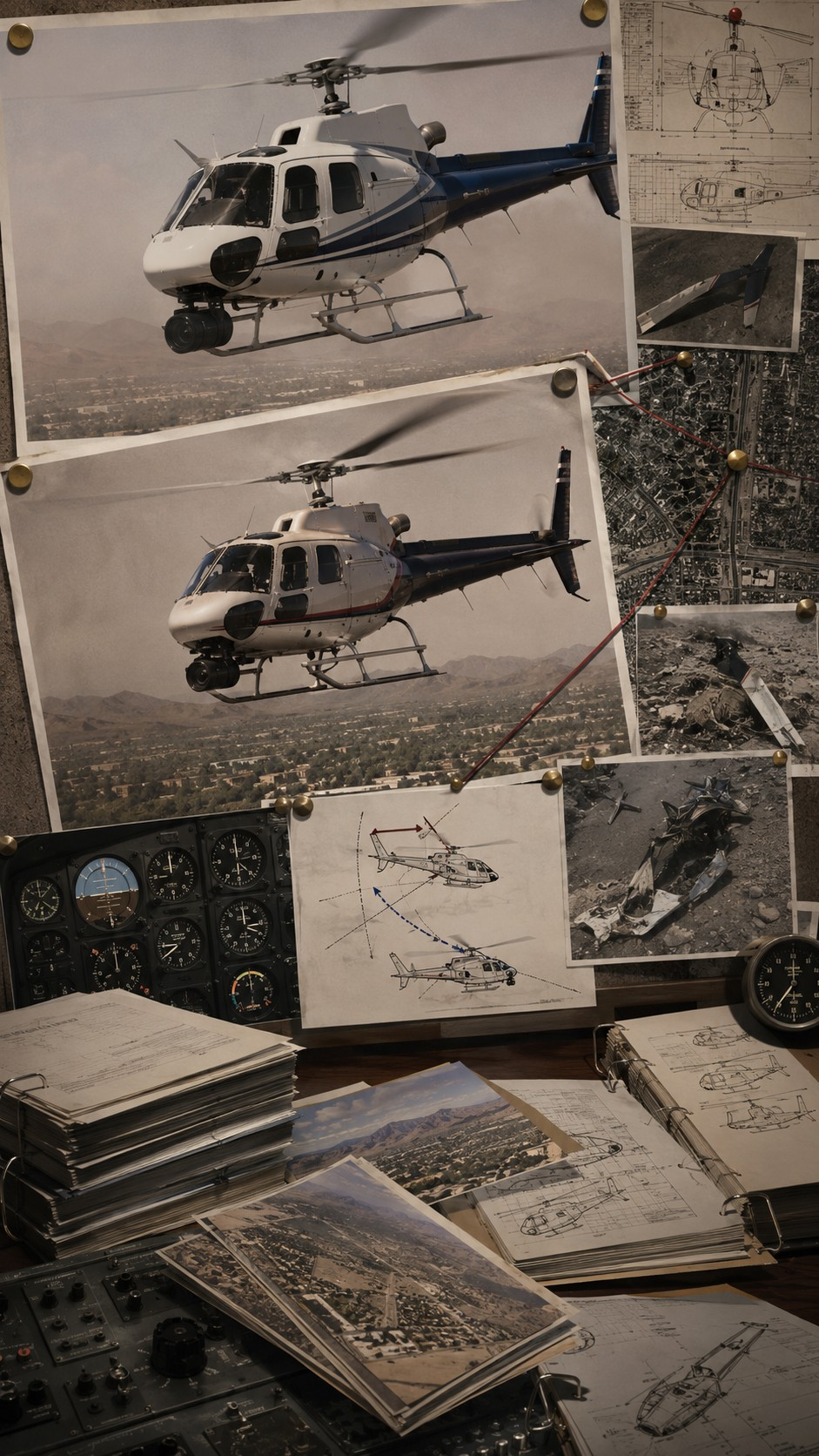
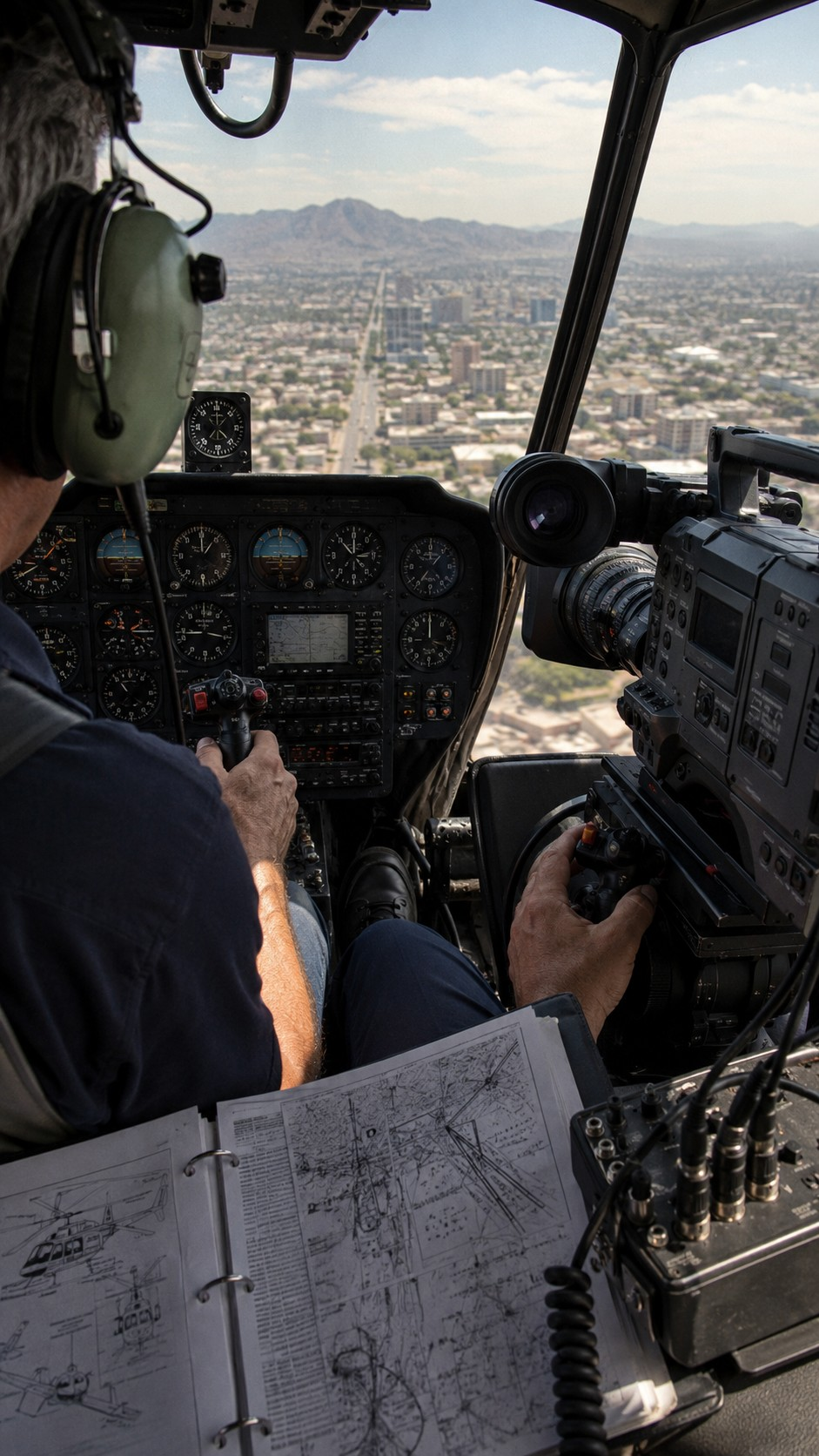
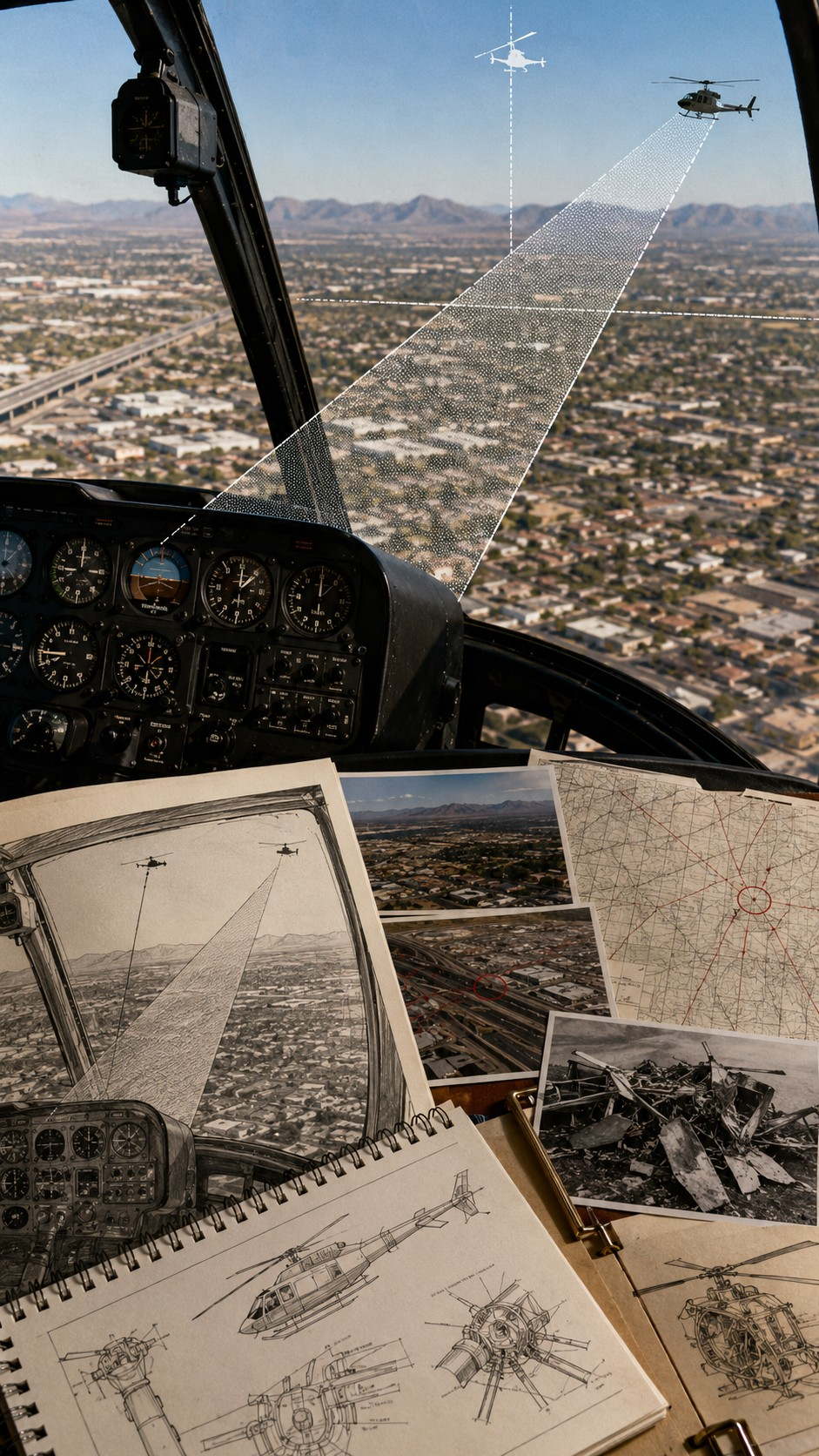
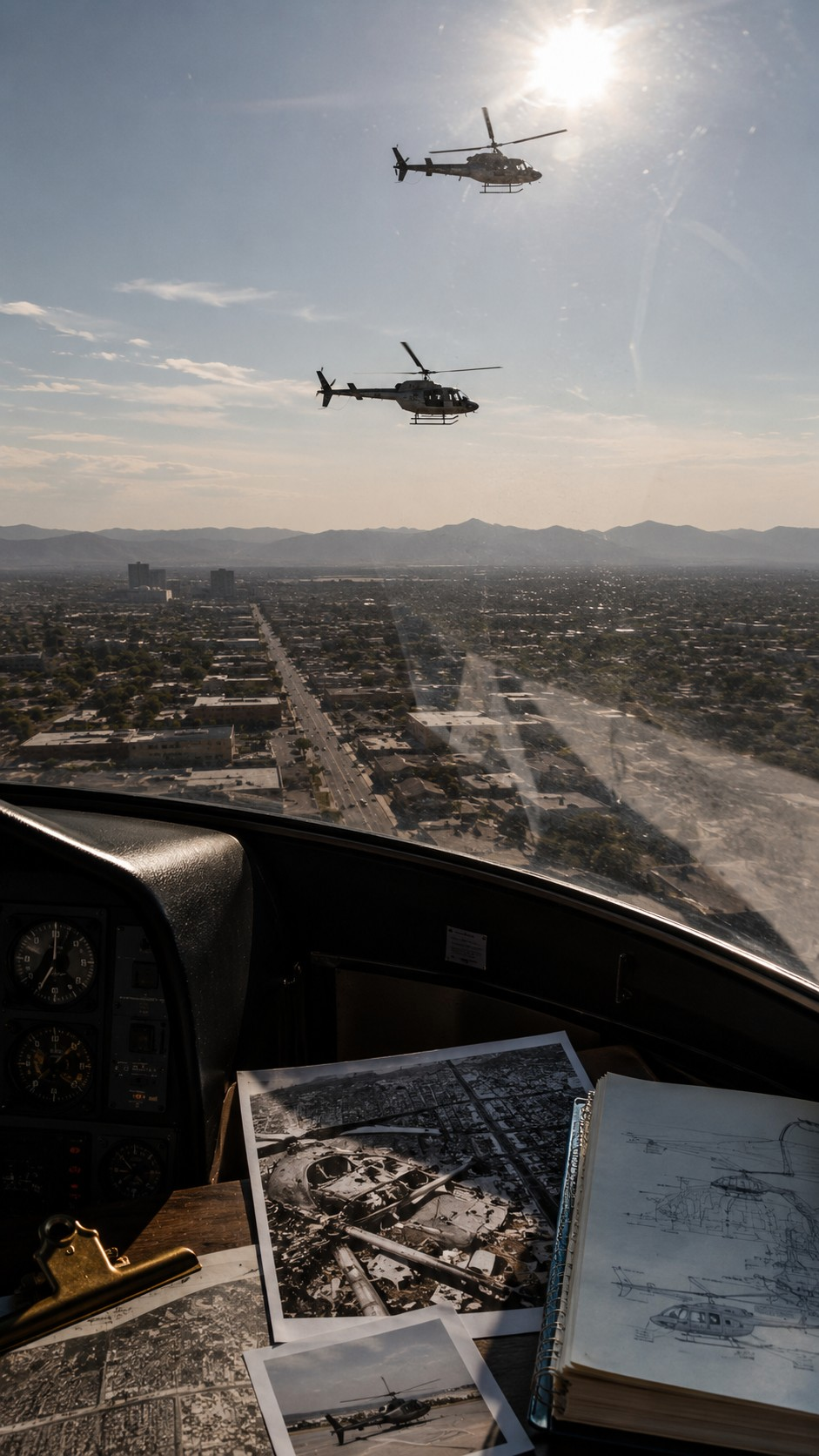
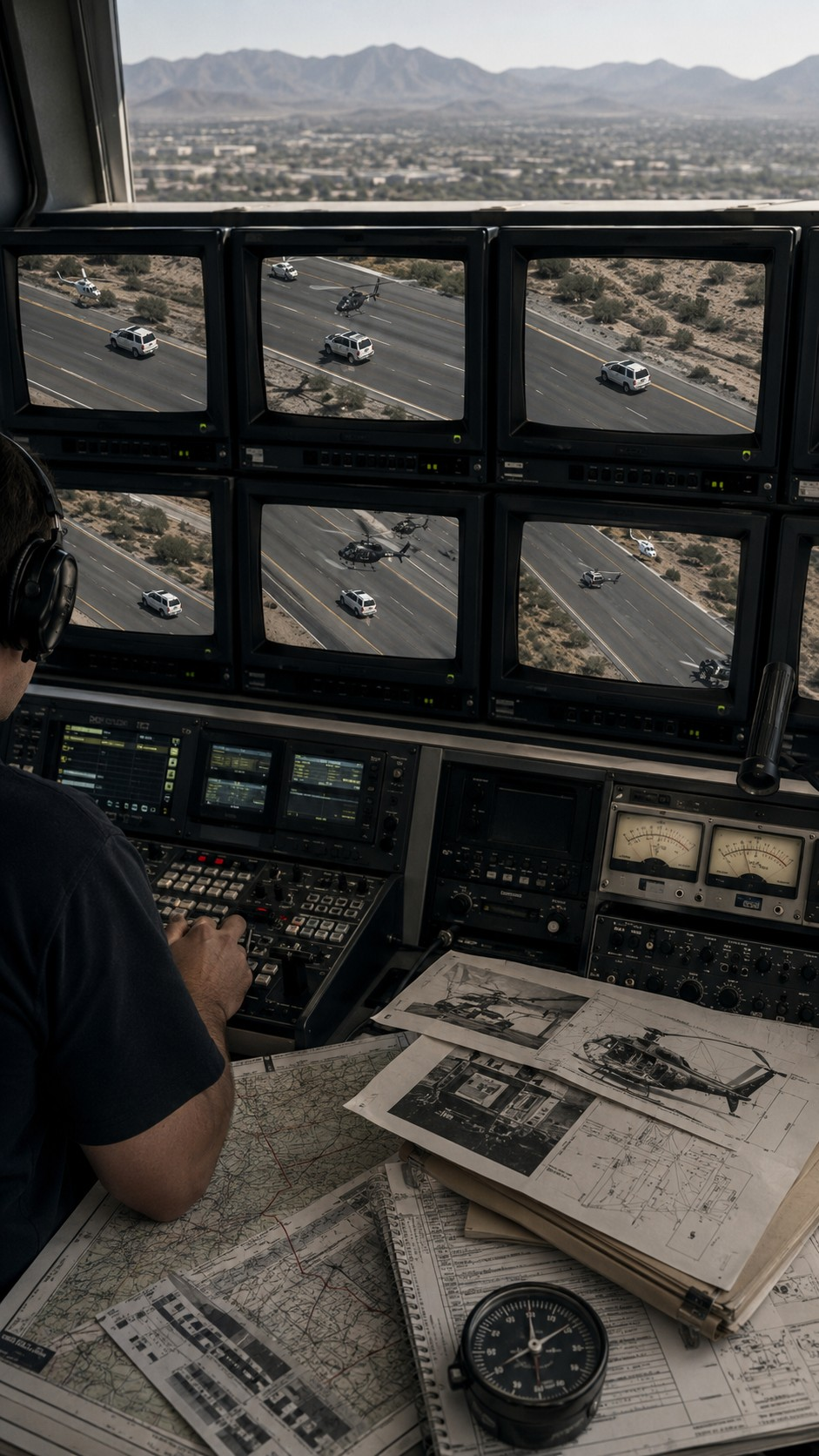
This folio expands the published Casefile video into a library record: the narrative spine, source trail, key still scenes, and reading path. The claim stays narrow: A Signal Casefile reconstruction of the 2007 Phoenix ENG helicopter collision, where workload, visual separation, and missing local procedures turned a live police chase into an aviation accident.
01Claim
The case begins with a statement that sounds too clean until the timing is checked.
On July 27, 2007, Phoenix viewers watched a police pursuit. The fatal risk was above it. At least five news helicopters and a police helicopter were working the same moving scene. Two AS350B2 news helicopters, tied to KTVK and KNXV, were both tracking the chase. The pilots were flying, reporting, talking on radio, and keeping a live camera on target.
02Evidence
The evidence matters because it converts atmosphere into sequence.
Their main protection was visual separation: see the other aircraft, then avoid it. They believed they had each other in sight. That belief became fragile in a crowded, moving sky. The same live image pulled every lens and flight path toward one square of ground. Then came the question that explains the case: where is Three?
03Mechanism
The mechanism is the hidden hinge: how ordinary constraints turn into an outcome.
The answer was almost literal. One helicopter was on top of the other. At about 12:46, the two aircraft collided over Phoenix. Both pilots and both photographers were killed. The broadcast became an absence. Investigators reconstructed it from debris, radar, audio, video, and cockpit workload.
04Consequence
The consequence is what remains after the shock has passed.
The NTSB found both pilots failed to see and avoid the other helicopter. Reporting, camera tracking, and the lack of formal local procedures all contributed. The case is not only about two aircraft. It is about attention becoming a safety system.
05Sources
06Scene plates