This folio expands the published Casefile video into a library record: the narrative spine, source trail, key still scenes, and reading path. The claim stays narrow: A Signal Casefile reconstruction of the Messerschmitt Me 163 Komet, the operational rocket interceptor whose extreme climb, volatile fuel, short endurance, and skid landings made the machine fight its own pilots.
01Claim
The case begins with a statement that sounds too clean until the timing is checked.
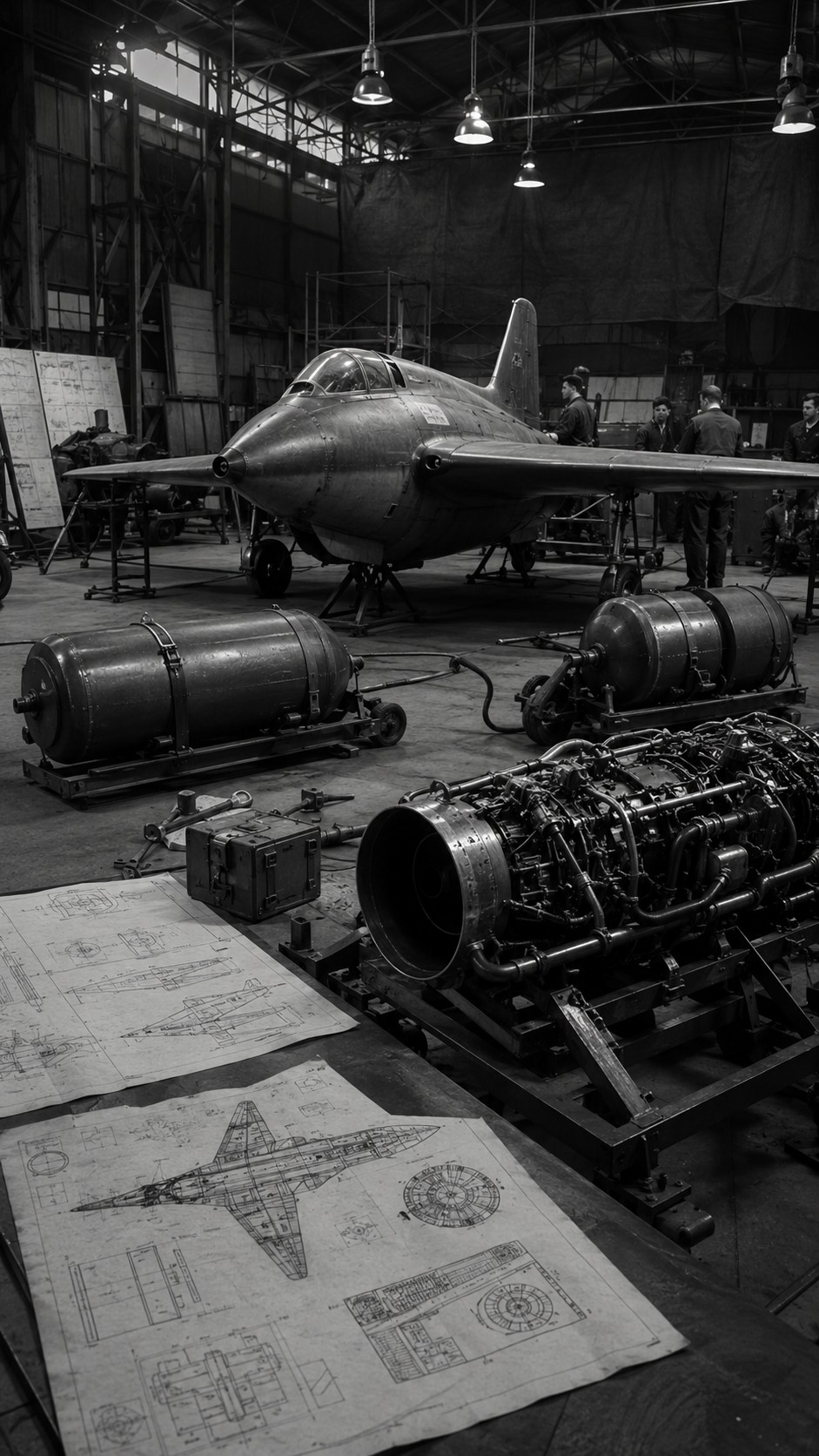
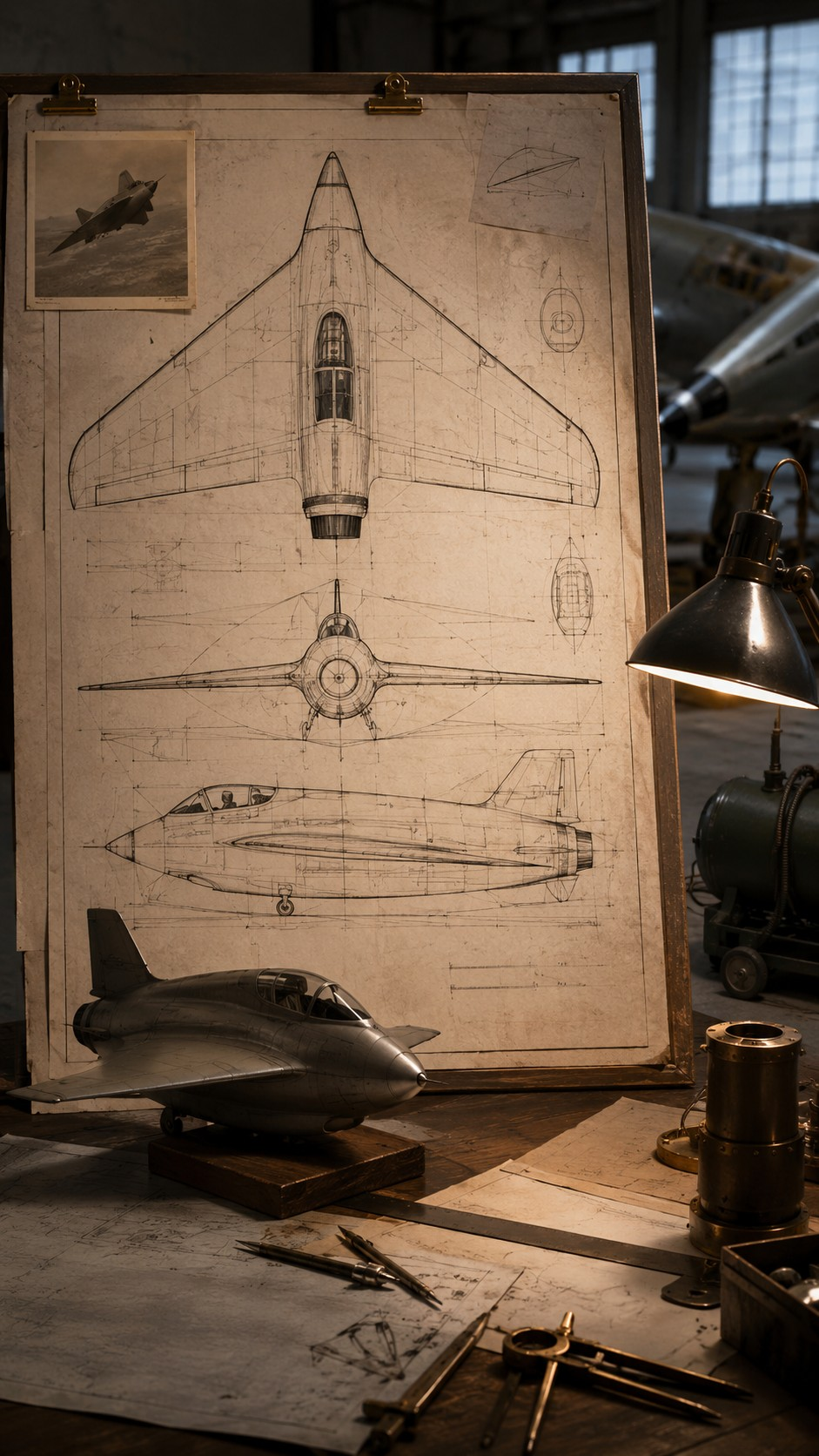
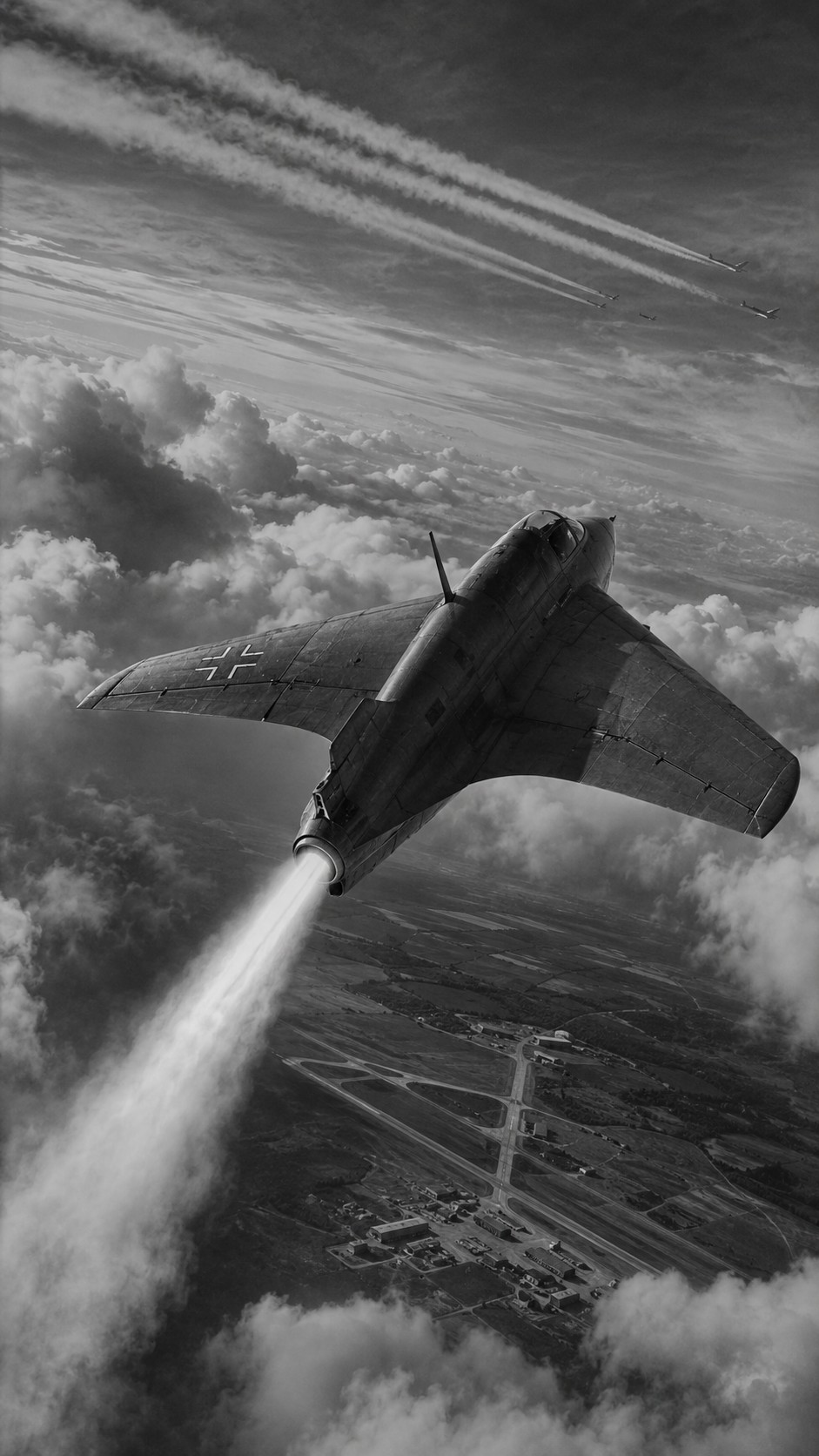
In 1944, Germany put a rocket engine into a tiny fighter and called it the Me 163 Komet. It became the first and only tailless rocket-powered interceptor to enter operational service. The promise was simple: climb faster than ordinary fighters and strike bomber formations from below. The catch was the clock. Full powered flight lasted only about seven and a half minutes.
02Evidence
The evidence matters because it converts atmosphere into sequence.
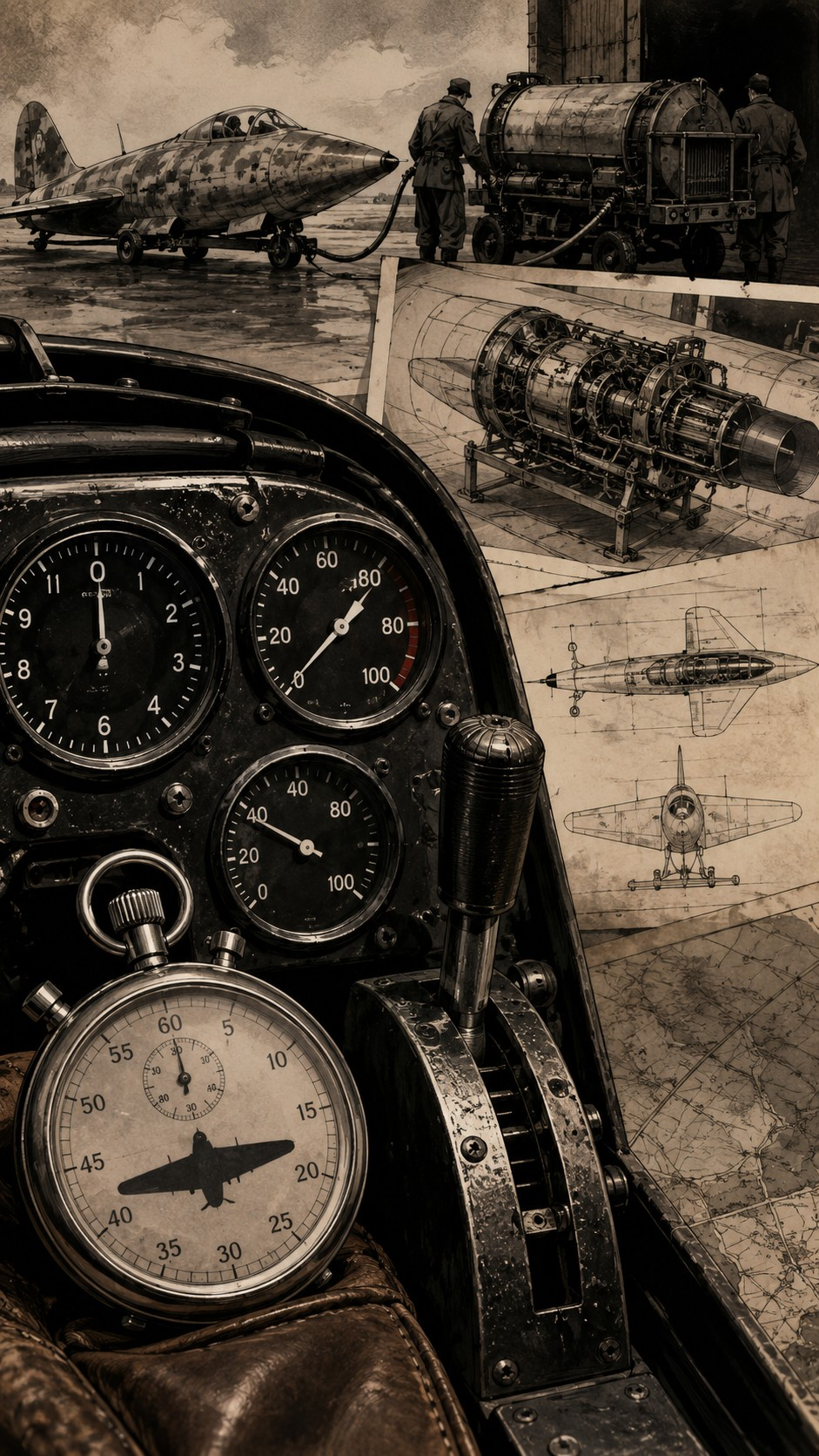
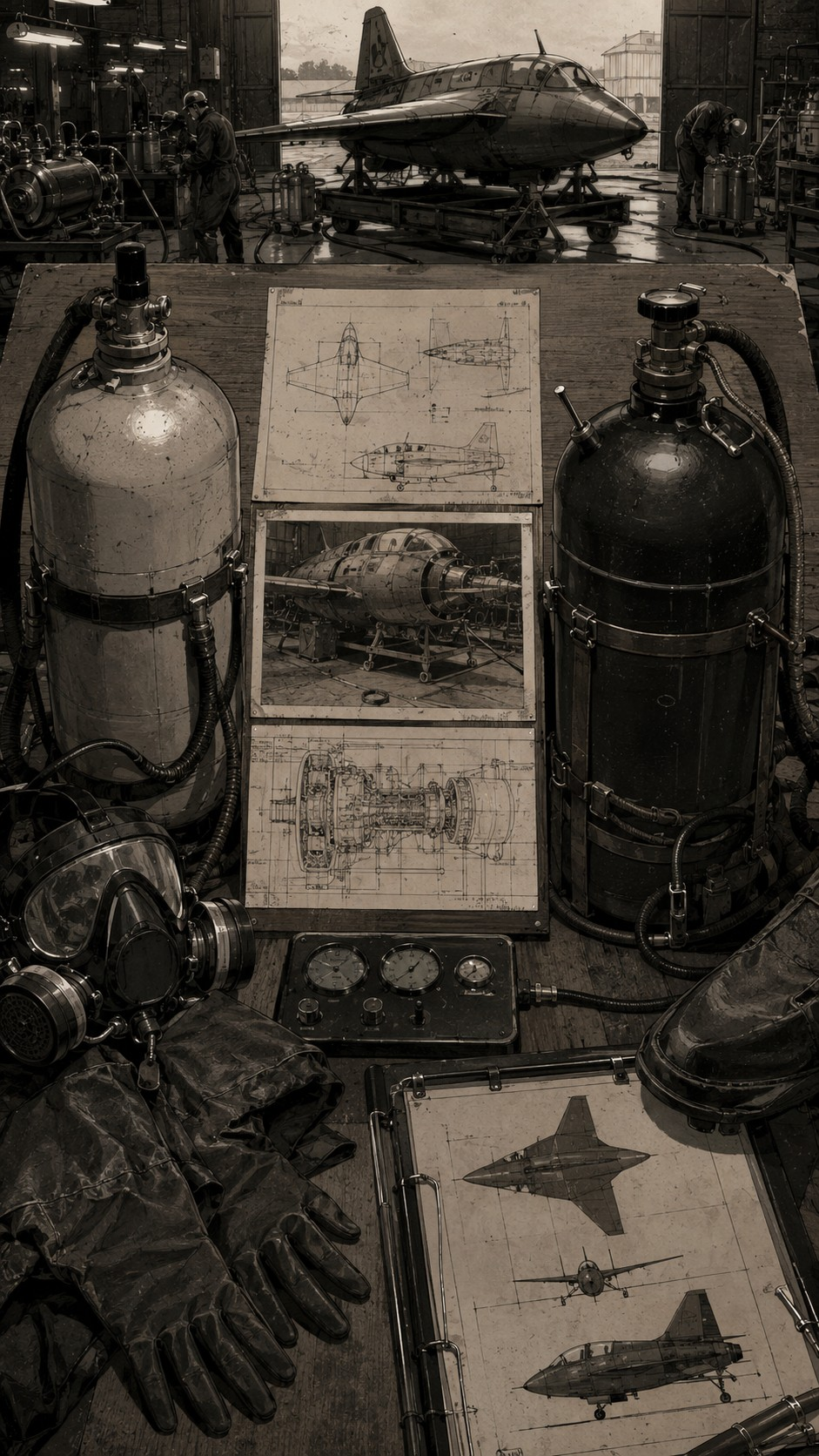
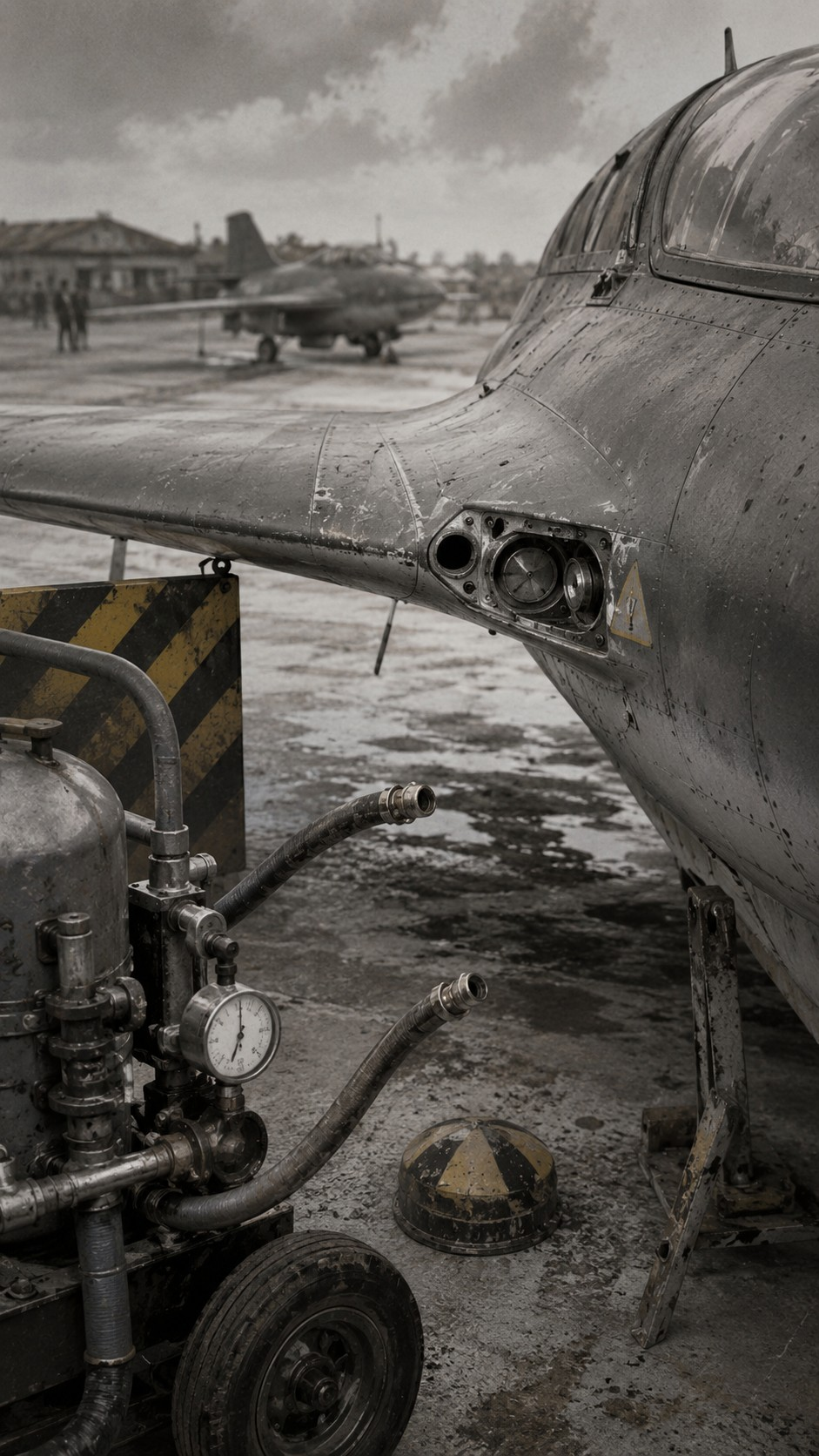
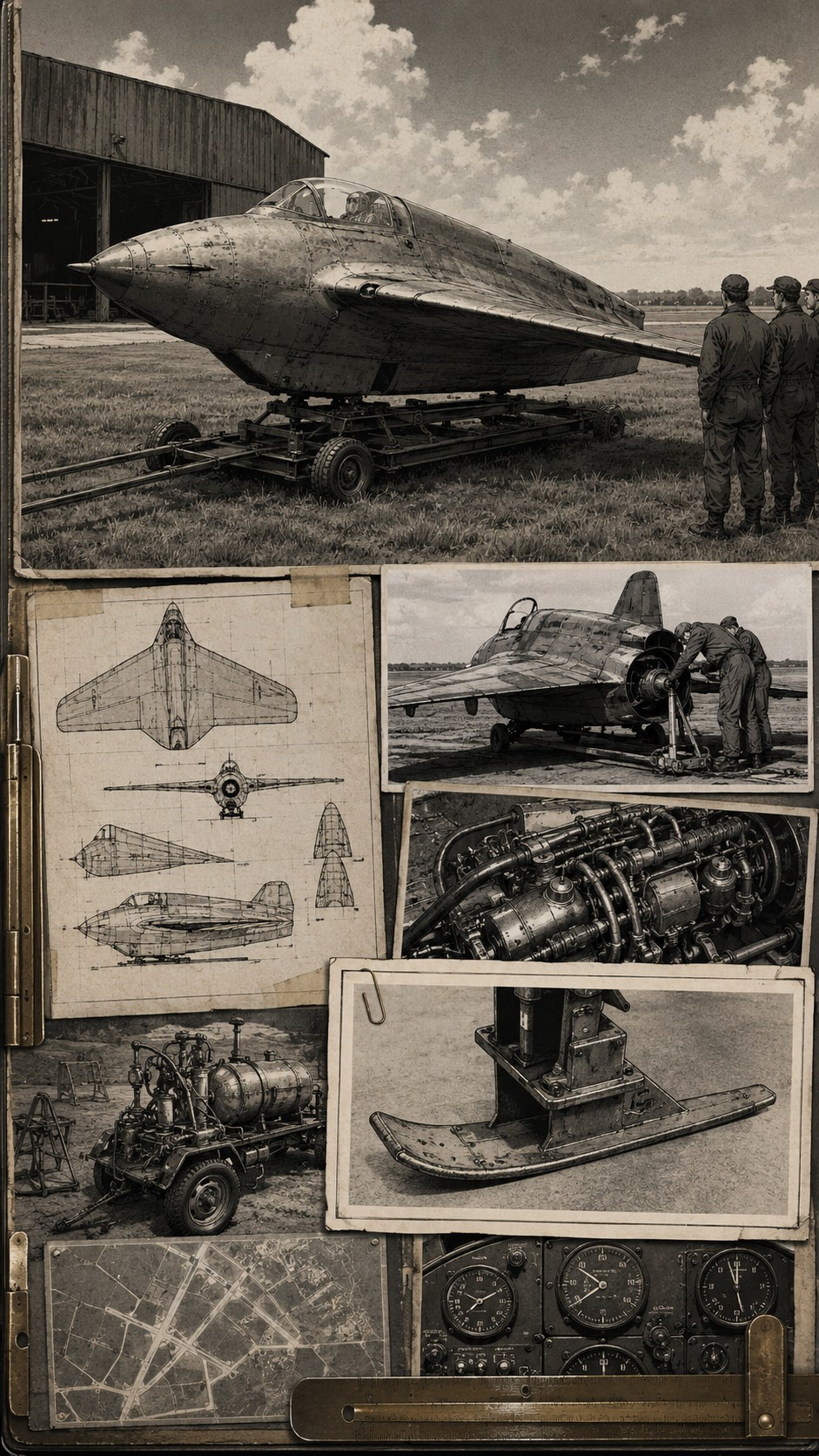
The engine used two dangerous liquids that had to be kept separate. If T-Stoff and C-Stoff met in the wrong place, the aircraft could become the accident. It took off on a wheeled dolly, dropped the wheels, and came home on a skid. The speed that made it frightening also made it hard to aim. A target could pass in seconds.
03Mechanism
The mechanism is the hidden hinge: how ordinary constraints turn into an outcome.
When the fuel was gone, the rocket fighter became a glider with a dangerous landing still ahead. A rough skid landing with fuel residue could turn performance into punishment. Production aircraft were not operational until July 1944, late in a collapsing war. The U.S. Air Force museum credits the unit with nine victories and fourteen Komet losses.
04Consequence
The consequence is what remains after the shock has passed.
One surviving aircraft even carries possible sabotage clues from the people forced to build it. The mechanism is the lesson: speed, chemistry, and short margins made the design fight itself. The Komet proved a machine can be ahead of its time and still be too dangerous for its own age.
05Sources
- National Museum of the U.S. Air Force, Messerschmitt Me 163B Kometprimary_reference
- National Museum of the U.S. Air Force, Walter HWK 509A Rocketprimary_reference
- Smithsonian National Air and Space Museum, Messerschmitt Me 163 B-1a Kometmuseum
- War Bird Fanatics, Not a Toy: World's Scariest Aircraftsecondary
- vidIQ Qxir top-video ranking, Not a Toy: World's Scariest Aircraft at 4.84M viewsviewership_target
06Scene plates
07Further reading
As an Amazon Associate, Avaryn may earn from qualifying purchases.
- The Rocket and the Reich: Peenemünde and the Coming of the Ballistic Missile Era Michael J. Neufeld · intro
- German Rocket Fighters Manfred Griehl · deep
- The Luftwaffe War Diaries Cajus Bekker · extended