This folio expands the published Art video into a library record: the narrative spine, source trail, key still scenes, and reading path. The claim stays narrow: John William Waterhouse’s 1896 painting turns a beautiful myth into a quiet scene of annihilation, then collides with modern debates after its temporary 2018 removal from Manchester Art Gallery. The image endures because it fuses seduction, power reversal, and disappearance into one suspended second.
01What you see
The visual surface is the first piece of evidence, not decoration.
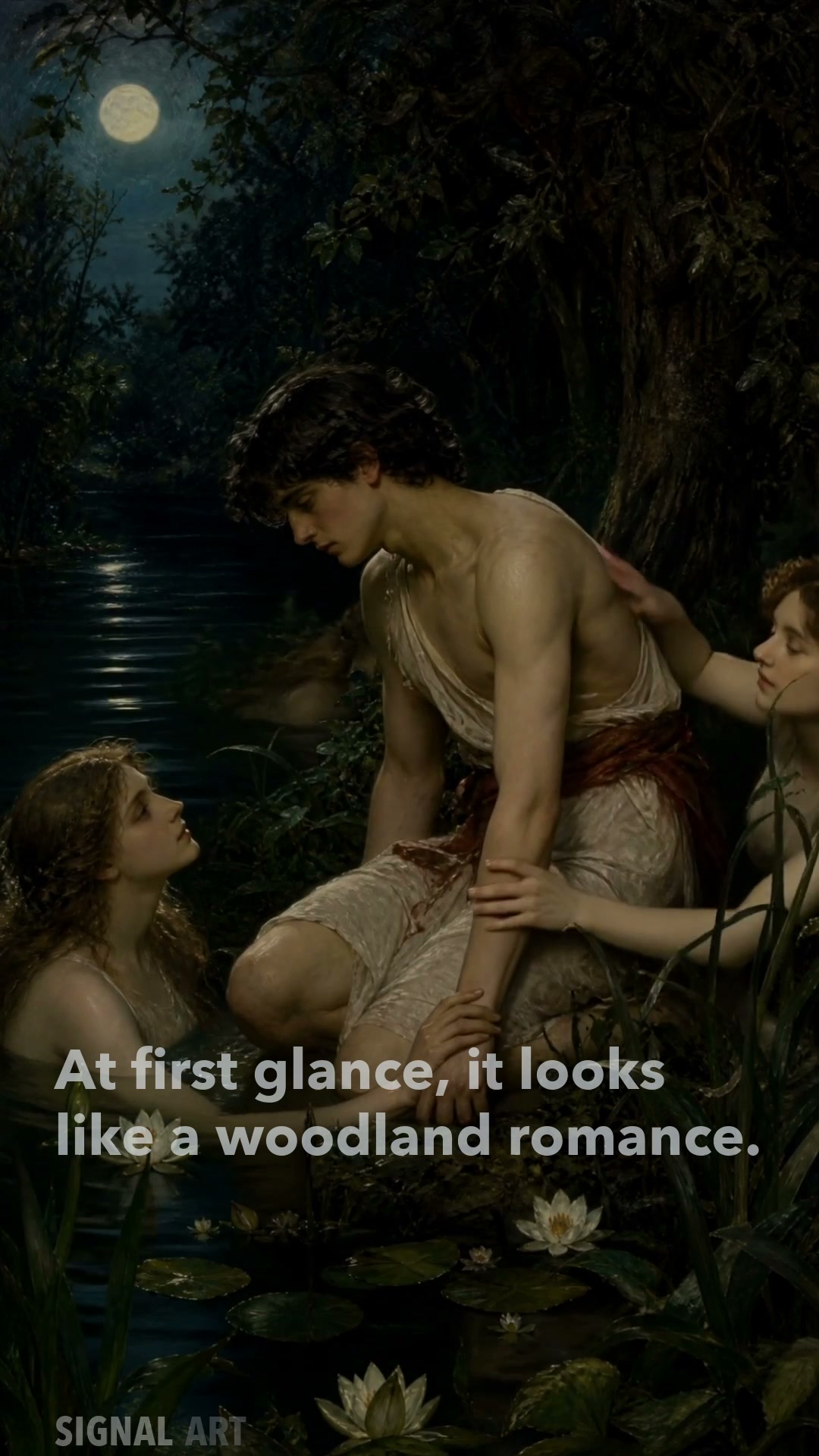
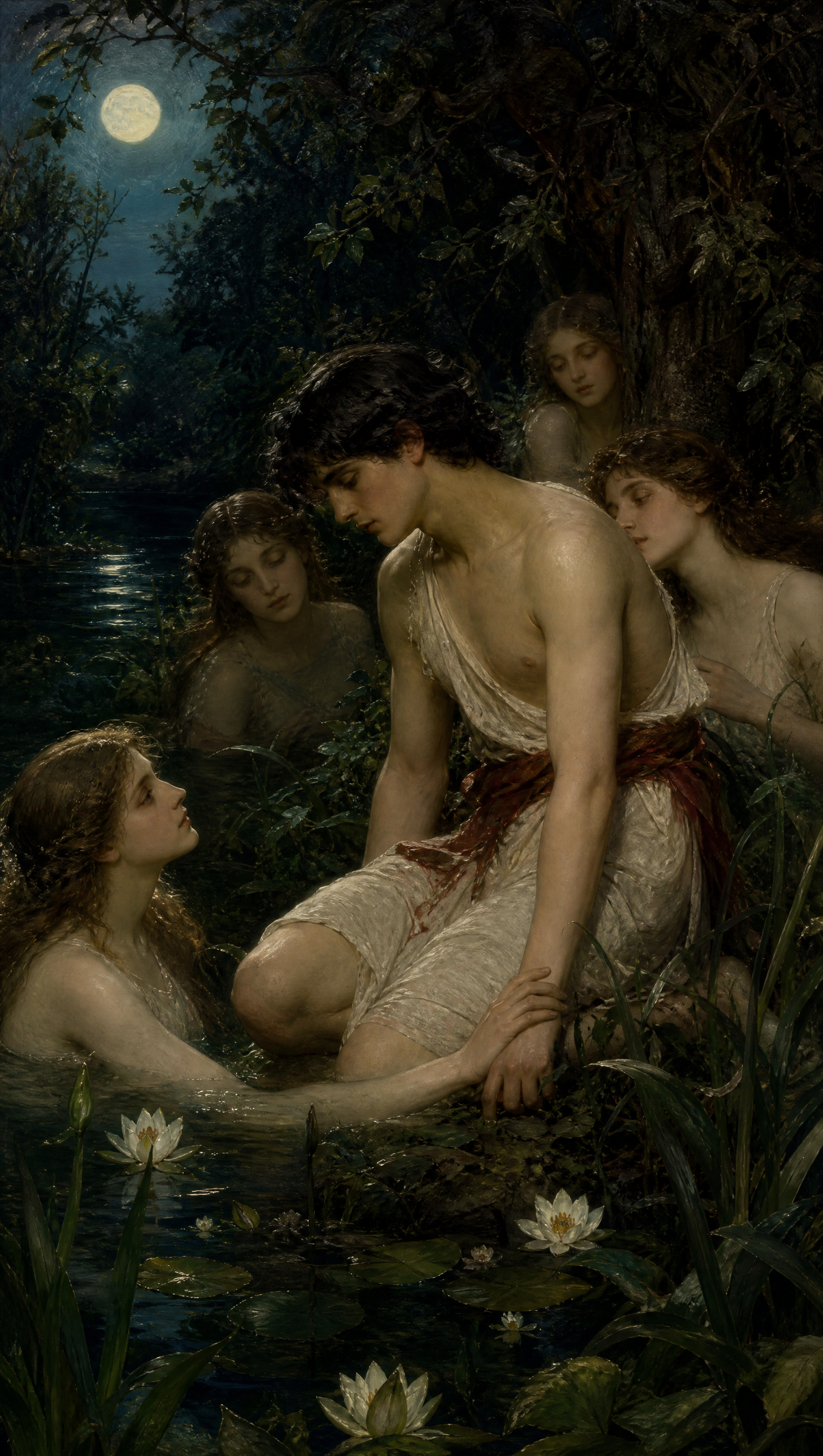
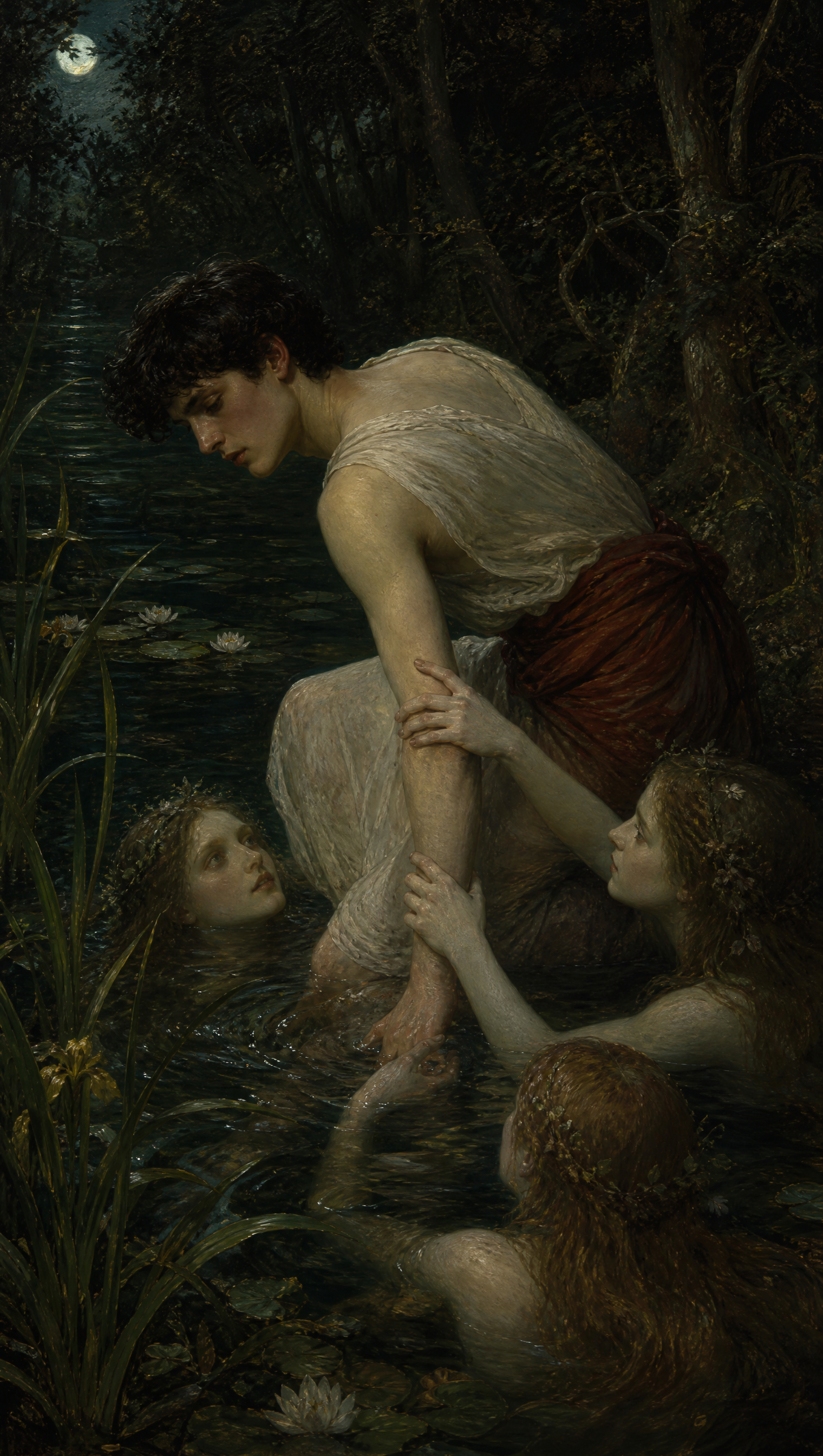
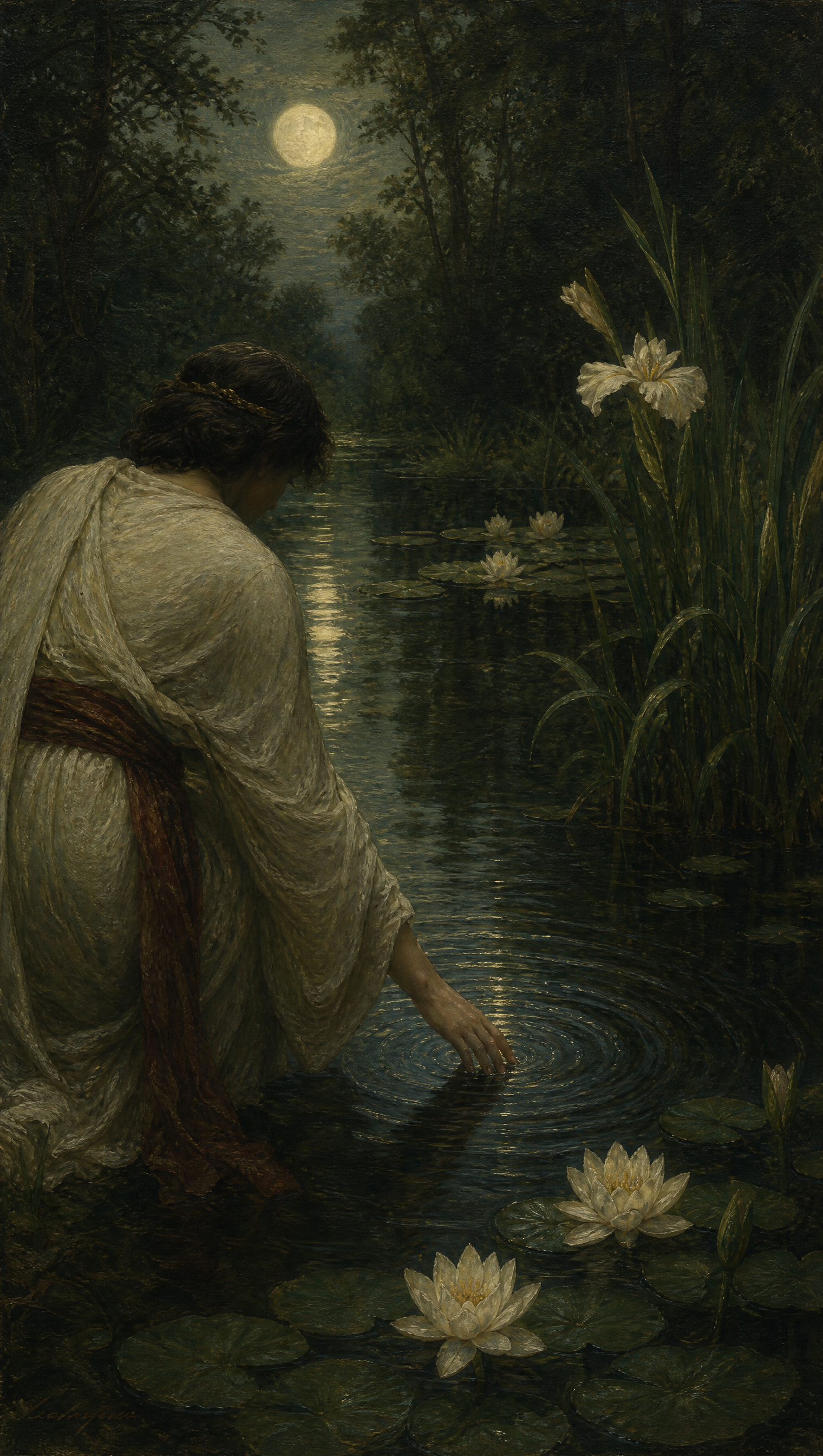
At first glance, it looks like a woodland romance. Then the hands come into focus. Pale fingers close around Hylas, and every gesture pulls him downward.
02What it meant
The section keeps the video's core idea in written form.
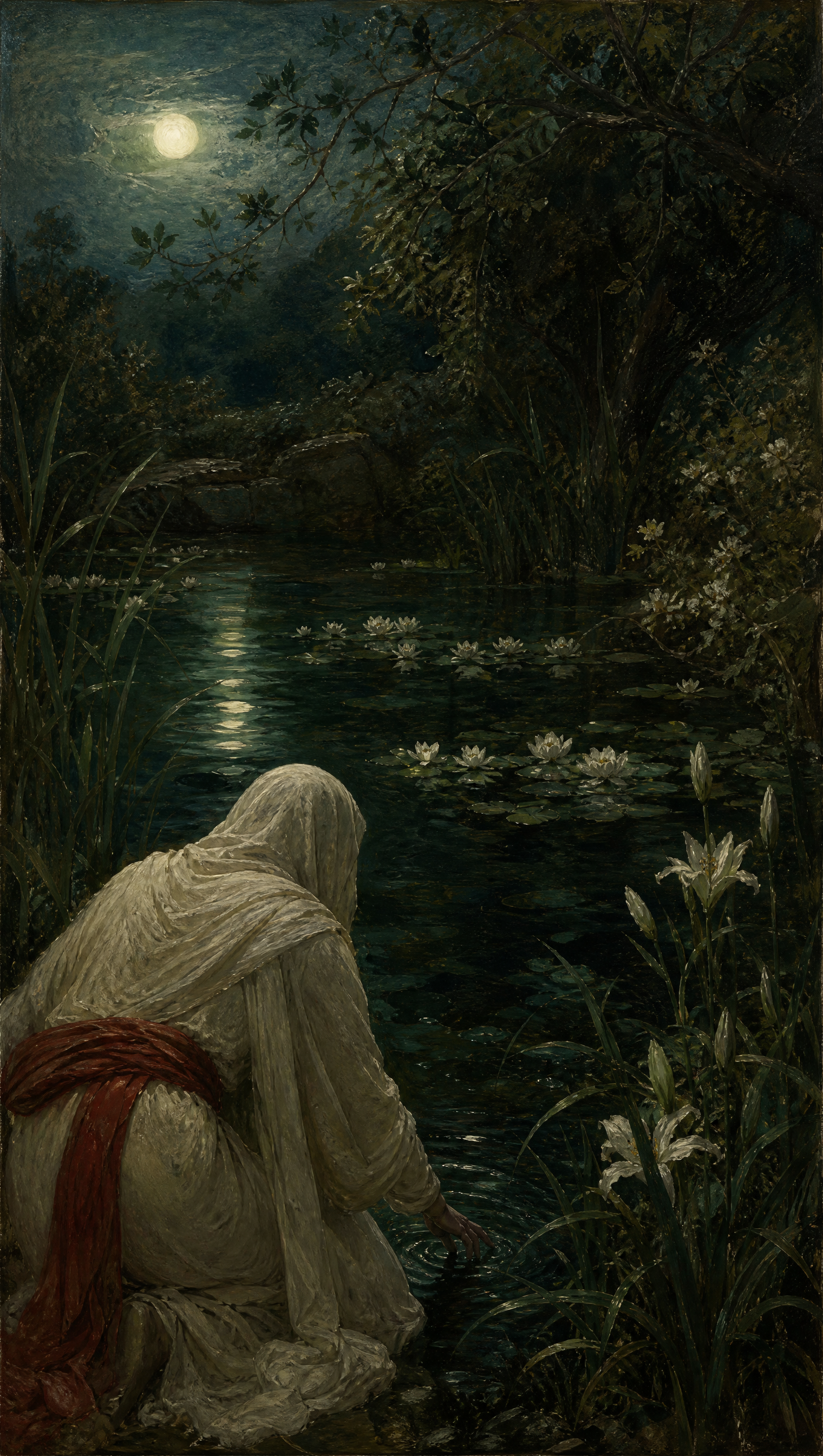
Painted in 1896, Hylas and the Nymphs stages a Greek myth on the edge of silence. Hylas, companion of Hercules, kneels for water on Chios. The naiads do not strike him.
03Technique
The section keeps the video's core idea in written form.
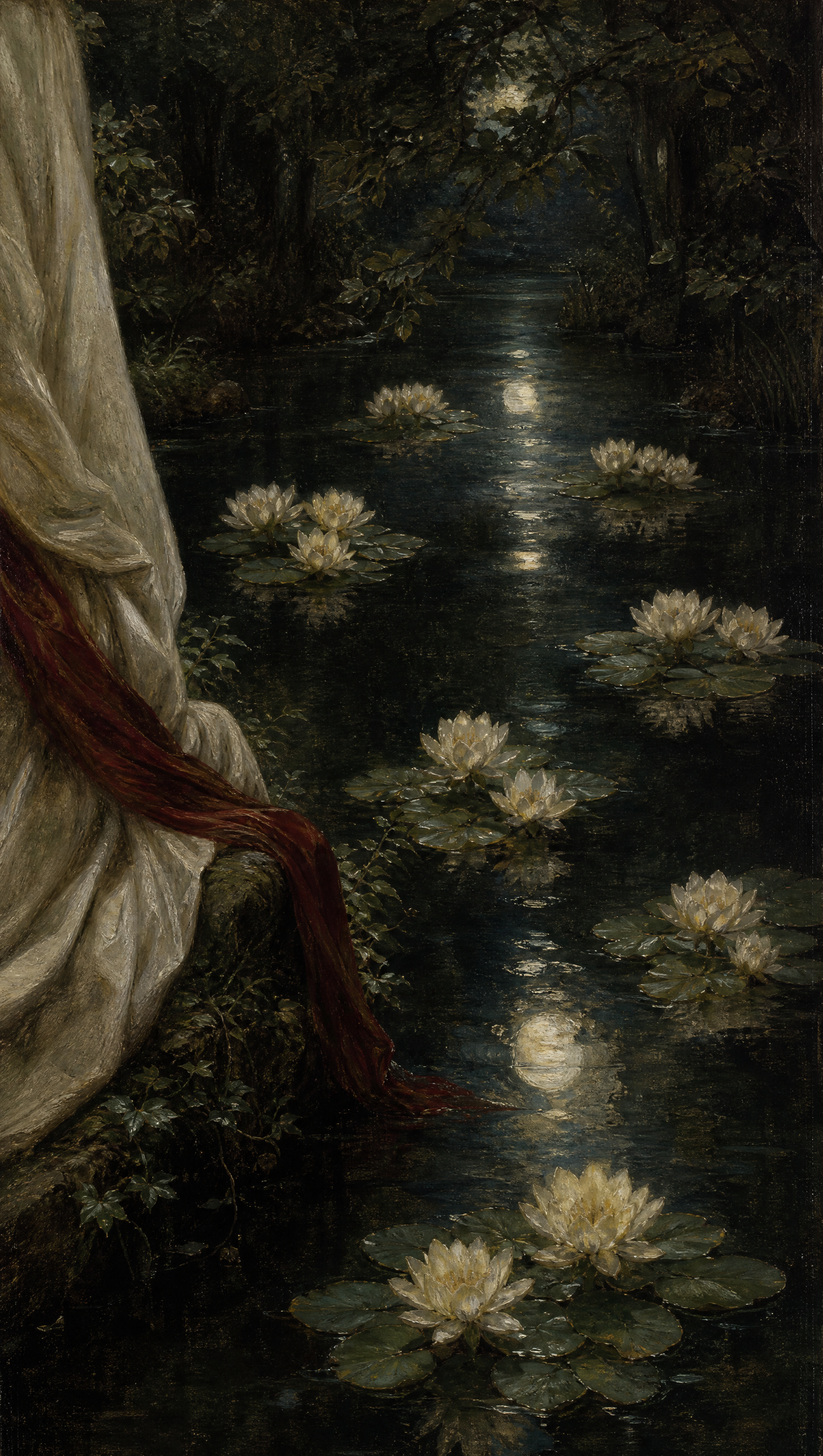
The horror is compositional. Seven near-identical nymphs merge with lilies and dark water, while Hylas leans off balance, his red sash the last warm note against the green.
04Why it lasts
The section keeps the video's core idea in written form.
That tension resurfaced in 2018, when Manchester Art Gallery temporarily removed the painting to provoke debate over displaying female bodies. The work returned within a week, but the argument remained.
05Sources
This entry follows the published video package. Source links were not attached to this older sidecar.
06Scene plates
07Further reading
As an Amazon Associate, Avaryn may earn from qualifying purchases.
- The Story of Art E. H. Gombrich · intro
- The Painting of Modern Life: Paris in the Art of Manet and His Followers T. J. Clark · deep
- Ways of Seeing John Berger · extended