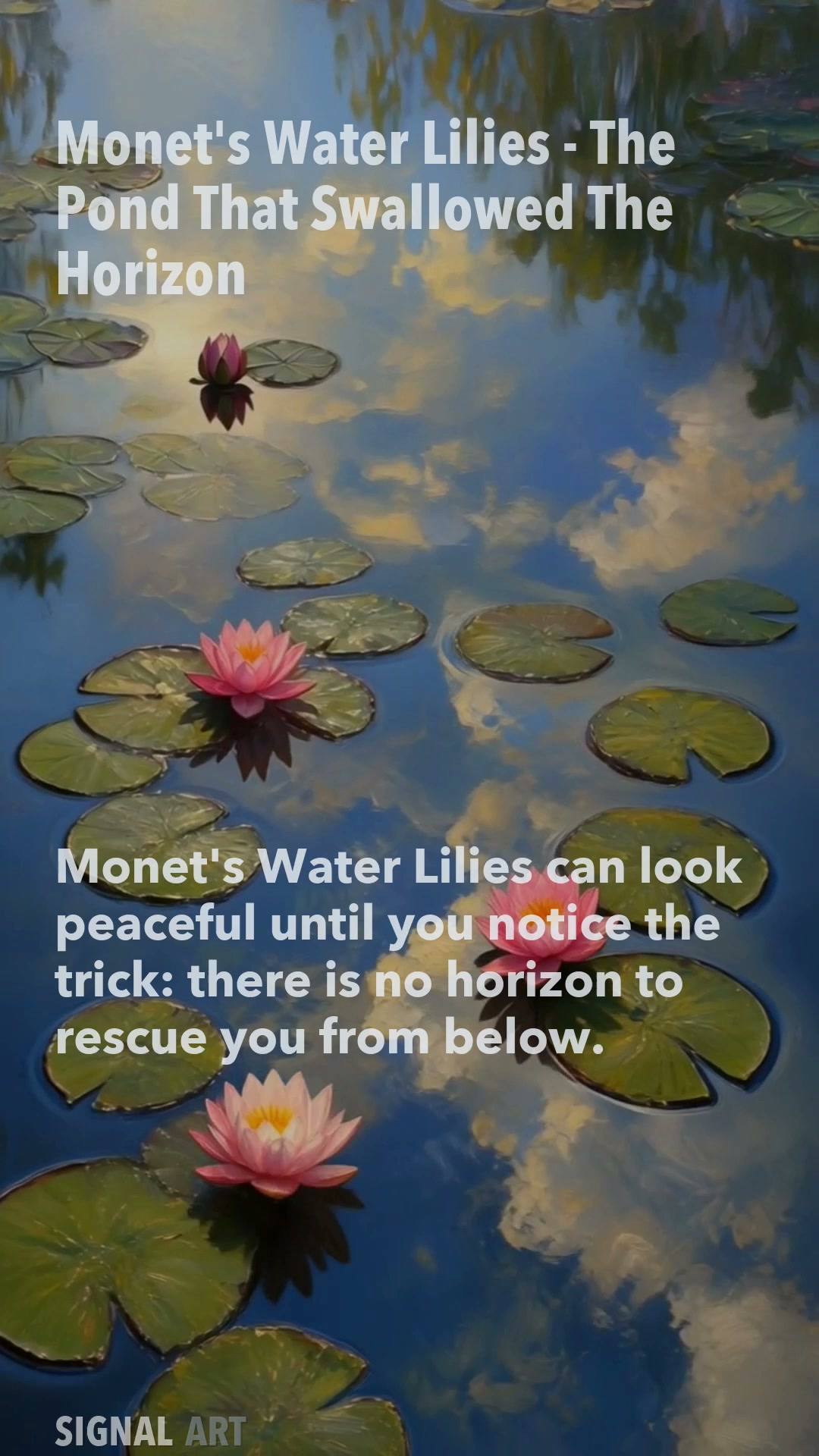
This folio expands the published Art video into a library record: the narrative spine, source trail, key still scenes, and reading path. The claim stays narrow: Monet's Water Lilies can look peaceful until you notice the trick: there is no horizon to rescue you from below. The pond becomes a whole world, and the viewer is placed inside reflection. The brushwork keeps dissolving edges.
01What you see
The visual surface is the first piece of evidence, not decoration.
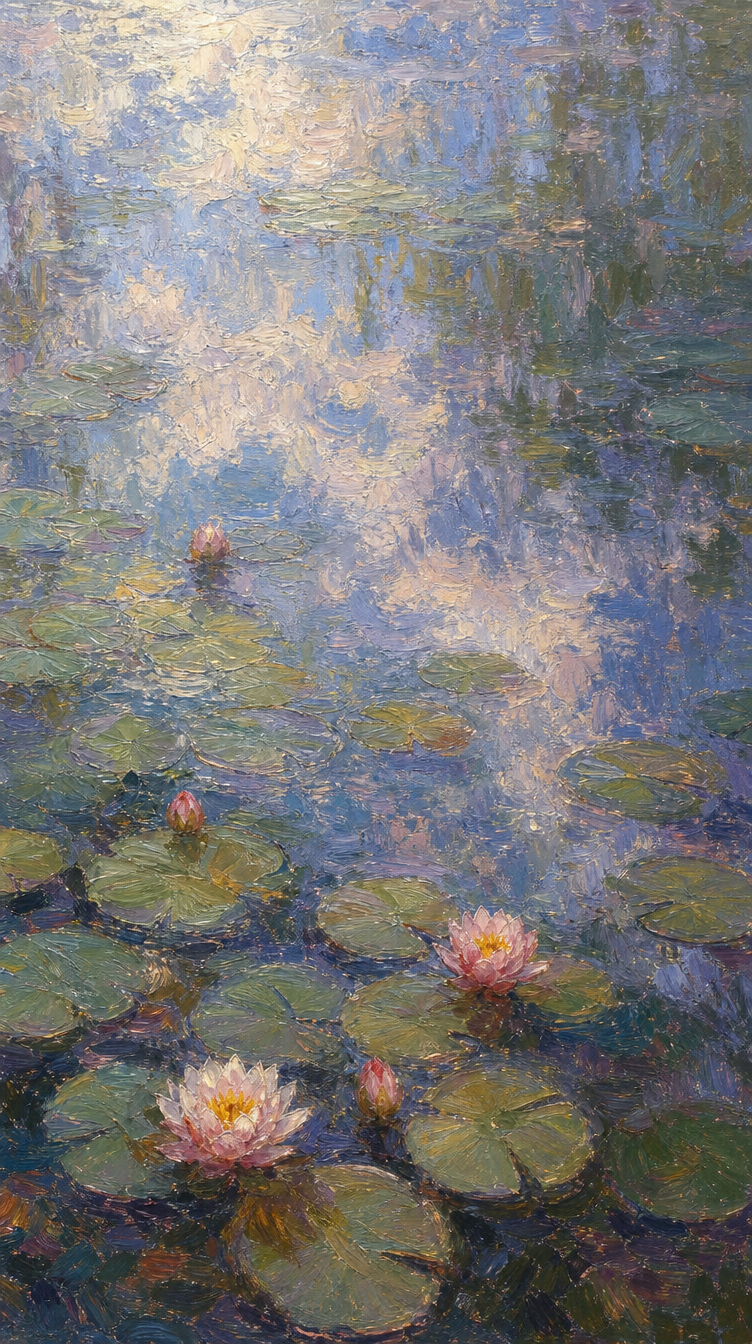
Monet's Water Lilies can look peaceful until you notice the trick: there is no horizon to rescue you from below. The pond becomes a whole world, and the viewer is placed inside reflection. The brushwork keeps dissolving edges.
02What it meant
The section keeps the video's core idea in written form.
Leaves, clouds, water, and sky trade places at once, so depth stops behaving. Monet is not painting scenery; he is painting perception losing its frame. That mattered late in his life, when the garden at Giverny became a laboratory for sustained looking.
03Technique
The section keeps the video's core idea in written form.
Repetition turns the same pond into time, weather, memory, and doubt. The missed point is not softness. Water Lilies is radical because it removes stable ground.
04Why it lasts
The section keeps the video's core idea in written form.
You do not look across a landscape; you drift inside an image that will not settle. That is the quiet shock.
05Sources
- Museum collection or official page - Water Liliesmuseum
- Authoritative biography - Claude Monetreference
06Scene plates


07Further reading
As an Amazon Associate, Avaryn may earn from qualifying purchases.
- Mad Enchantment: Claude Monet and the Painting of the Water Lilies Ross King · intro
- Monet: Nature into Art John House · deep
- The Phenomenology of Perception Maurice Merleau-Ponty · extended