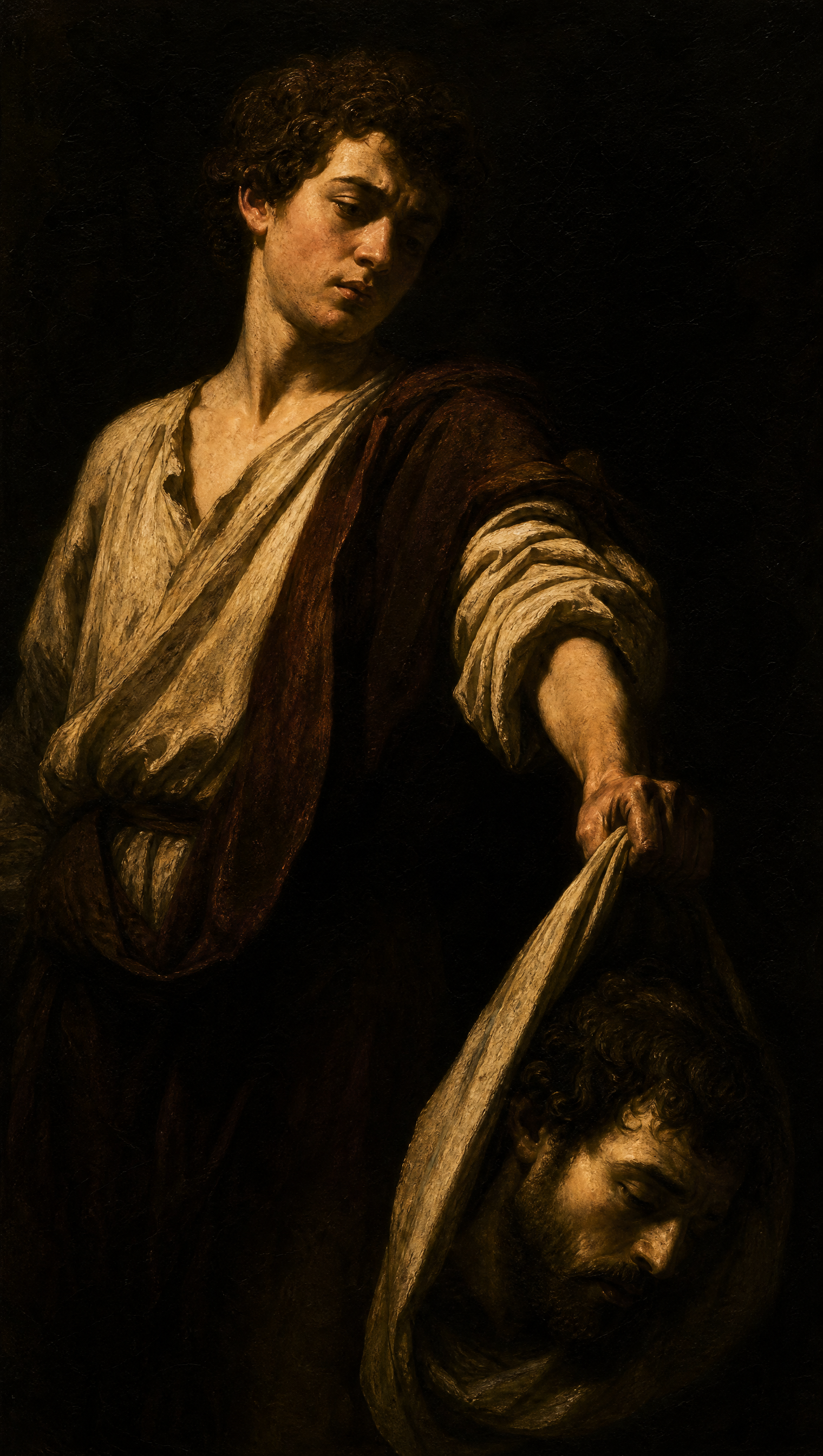
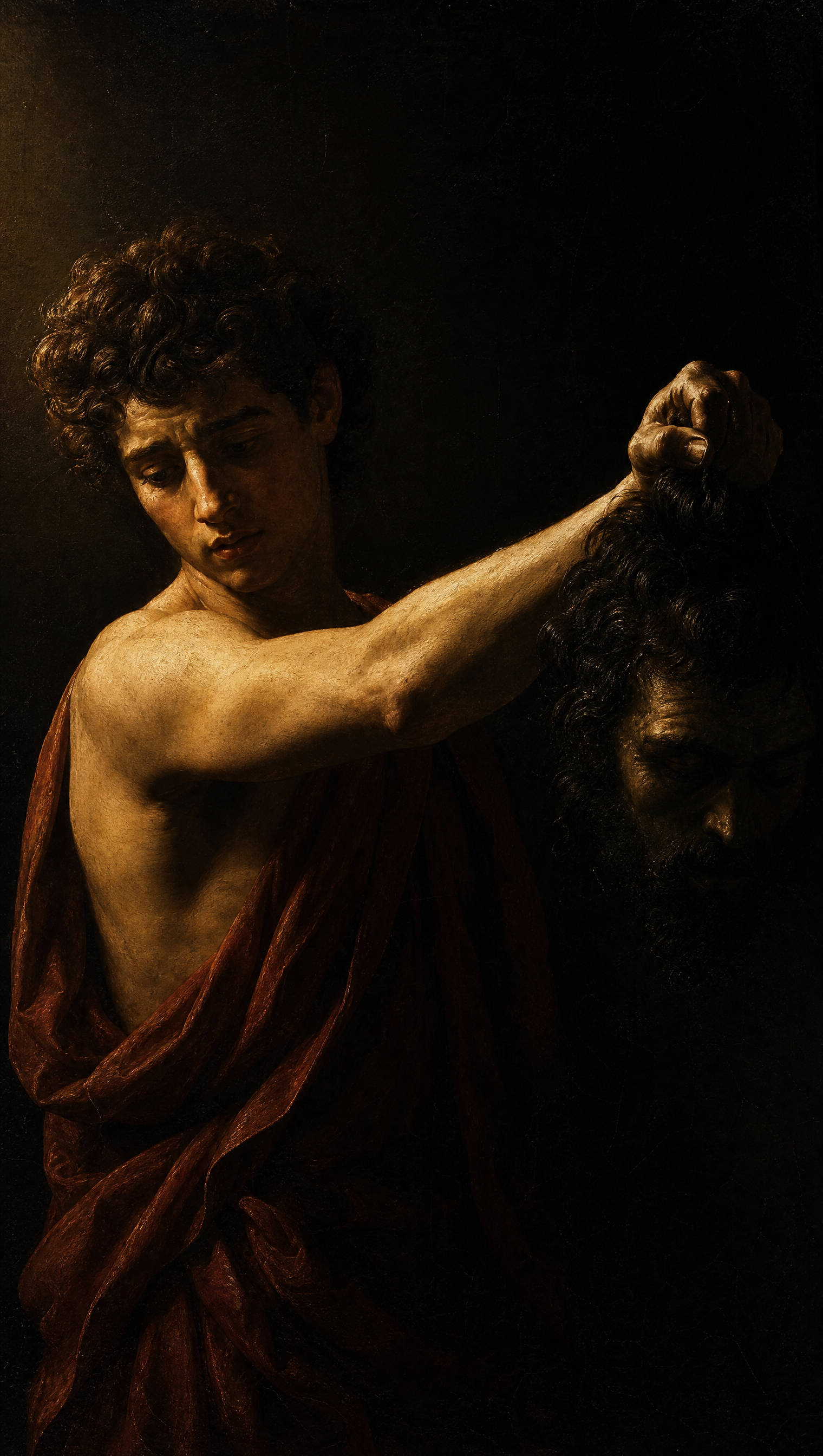
This folio expands the published Art video into a library record: the narrative spine, source trail, key still scenes, and reading path. The claim stays narrow: Why does Caravaggio's David feel uneasy? Because this victory scene is really a confession. David lifts Goliath's head, but Goliath carries Caravaggio's own face, so judgment in the painting turns inward immediately.
01What you see
The visual surface is the first piece of evidence, not decoration.
Why does Caravaggio's David feel uneasy? Because this victory scene is really a confession. David lifts Goliath's head, but Goliath carries Caravaggio's own face, so judgment in the painting turns inward immediately.
02What it meant
The section keeps the video's core idea in written form.
That changes everything. David is not gloating. His arm extends the head away, his face softens, and the darkness swallows the background. The canvas separates the core pattern from the legend wrapped.
03Technique
The section keeps the video's core idea in written form.
And the mechanism is simple. By putting his own features on Goliath, Caravaggio collapses hero and sinner into one body. The painting stops being about defeating evil out there and starts judging violence.
04Why it lasts
The section keeps the video's core idea in written form.
So the usual takeaway is backwards. This is not swagger after victory. It is accountability staged as paint and light. Caravaggio makes the monster look like himself, and teaches you to search art.
05Sources
- Met Museumresearch_note
- MoMAresearch_note
- National Gallery of Artresearch_note
- Tateresearch_note
06Scene plates


07Further reading
As an Amazon Associate, Avaryn may earn from qualifying purchases.
- Caravaggio: A Life Sacred and Profane Andrew Graham-Dixon · intro
- Caravaggio Helen Langdon · deep
- The Power of Images: Studies in the History and Theory of Response David Freedberg · extended